
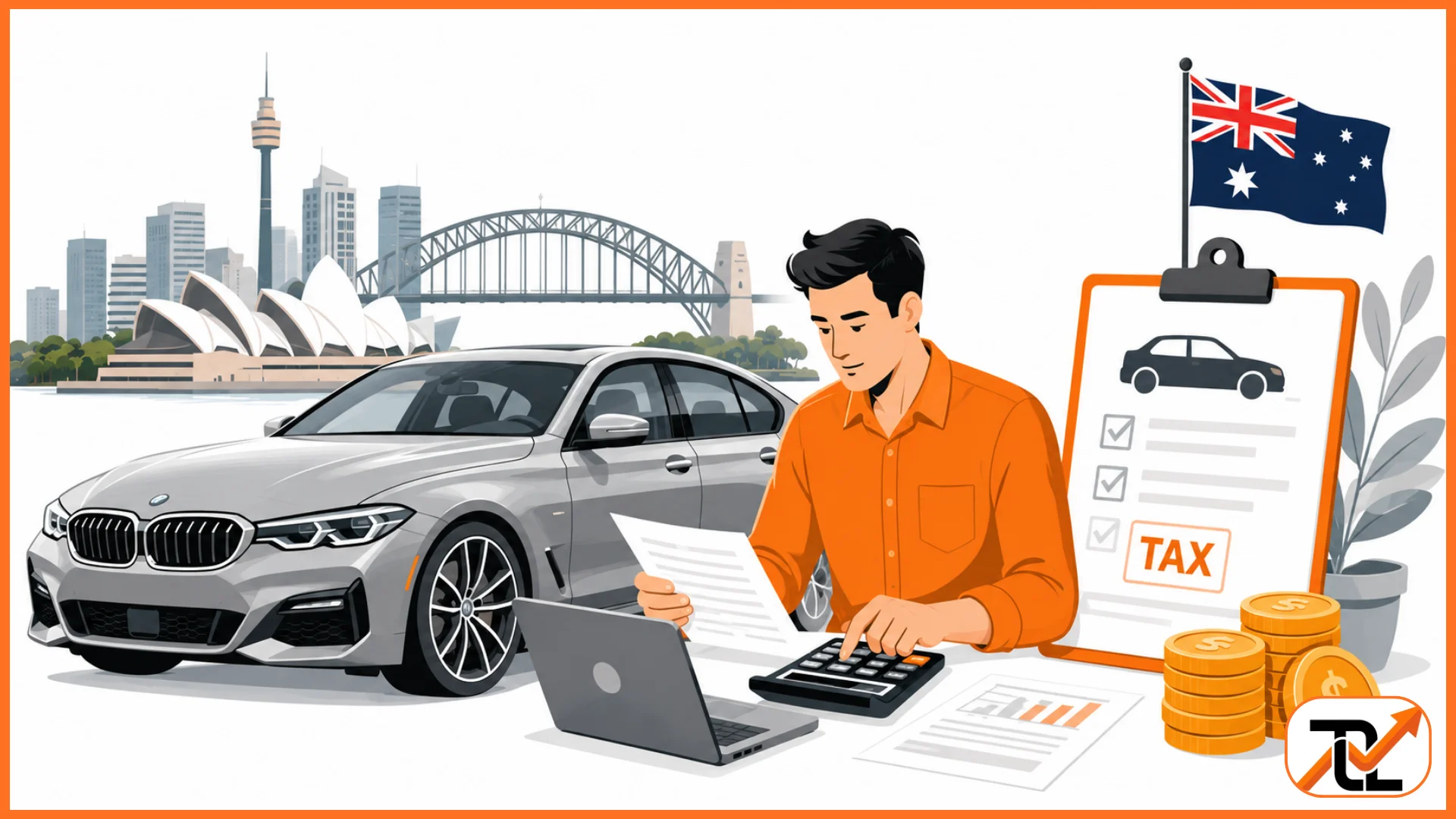
Luxury Car Tax adds an extra cost when eligible vehicles exceed the applicable value threshold set by Australian tax authorities. This tax can affect buyers, dealers, businesses, and importers who purchase or import luxury vehicles for Australian markets.
However, fuel-efficient luxury vehicles can receive a higher threshold, creating different outcomes for some newer and cleaner models. This guide explains who pays LCT, how authorities calculate it, and which strategies can help reduce unnecessary tax costs.
What is Luxury Car Tax in Australia?
The Luxury Car Tax (LCT) is an Australian tax charged on certain passenger vehicles that exceed a prescribed value threshold.
- The Australian Taxation Office applies LCT when a car’s value (including GST) exceeds its relevant threshold.
- LCT generally applies to vehicles sold domestically or imported, although specific exemptions and quoting rules may apply.
- The tax applies only to the amount above the applicable threshold, rather than the entire purchase price of your car.
Why is there a Luxury Car Tax?
Australia introduced Luxury Car Tax partly to preserve the tax treatment of higher-priced vehicles following broader tax reforms.
The original policy also aimed to support the local car manufacturing industry and discourage demand for expensive imported luxury cars. However, the tax now primarily operates as an additional charge on vehicles above the applicable value threshold.
At the same time, the system provides an incentive for buyers considering more fuel-efficient vehicles. These vehicles receive a higher LCT threshold, making greener choices comparatively less likely to attract the tax.
What is Luxury Car Tax Threshold?
The Luxury Car Tax threshold determines the vehicle’s value, including Goods and Services Tax, above which LCT becomes payable.
- Australia uses separate thresholds for fuel-efficient vehicles and standard cars.
- The ATO reviews these thresholds annually and adjusts them using the applicable indexation measure.
- Fuel-efficient vehicles receive a higher threshold because Australia encourages lower-emission vehicle purchases through tax policy.
- The relevant threshold depends on the vehicle’s fuel efficiency and classification under LCT rules.
Additionally, a new category for zero-emissions electric vehicles will apply under the Australia-European Union Free Trade Agreement. The new category provides a higher threshold, but it begins from 1 July 2027, subject to legislation.
Luxury Car Tax Rates in 2026
The LCT rate remains 33% for a car’s value above the threshold during 2026–27.
| Financial year | Fuel-efficient vehicles | Other vehicles |
|---|---|---|
| 2026–27 | $91,661 | $80,809 |
| 2025–26 | $91,387 | $80,567 |
| 2024–25 | $91,387 | $80,567 |
| 2023–24 | $89,332 | $76,950 |
| 2022–23 | $84,916 | $71,849 |
| 2021–22 | $79,659 | $69,152 |
Source: Australian Taxation Office threshold figures; 2026–27 figures reflect annual indexation.
The 33% rate has not changed since 1 July 2008, when it increased from 25%. For 2026–27, both thresholds increased modestly following a 0.3% CPI indexation factor. Additionally, the fuel-efficient threshold remains $10,852 above the standard threshold for this financial year. The LCT calculation applies the rate to the taxable amount above the threshold, not the total price.
Which Cars Fall Under Luxury Car Tax?
Luxury Car Tax generally applies to cars with a GST-inclusive value that exceeds the applicable LCT threshold. Luxury vehicles can include sedans, SUVs, sports cars, and other passenger cars primarily designed for carrying people. The ATO rules can cover new cars, imported vehicles, and certain near-new cars depending on the total purchase price.
Vehicles principally designed to carry goods generally fall outside LCT, even when their price exceeds thresholds. Special rules can also apply when businesses import or sell luxury cars as trading stock. Therefore, whether LCT applies depends on the vehicle’s purpose, value, transaction, and applicable threshold.
When and How Do You Pay Luxury Car Tax?
Generally, businesses that sell or import luxury cars must account for LCT. When a car’s GST-inclusive value exceeds the applicable threshold, the seller or importer usually calculates and reports the tax. Dealers generally include LCT in the relevant transaction and report it through their activity statement.
Importers normally account for Australia’s Luxury Car Tax when the vehicle enters Australia, unless eligible quoting arrangements apply. Consumers therefore usually do not lodge a separate LCT payment themselves after purchasing. Businesses report LCT alongside their GST obligations using the relevant activity statement labels. Additionally, businesses may need to consider whether an input tax credit applies to the GST component of eligible vehicle purchases.
How to Calculate LCT Applied?
For 2026–27, the LCT rate remains 33%, with tax applying only above the relevant threshold.
The ATO formula is:
(LCT value − LCT threshold) × 10 ÷ 11 × 33%
For example, suppose a standard passenger car has an LCT value of $100,000. Using the 2026–27 general threshold of $80,809, the amount above threshold equals $19,191. You then remove GST by multiplying $19,191 by 10/11, producing $17,446.36. Finally, multiplying that amount by 33% produces approximately $5,757.30 LCT payable.
Strategies to Minimise LCT
Several practical approaches can help car buyers reduce or avoid Luxury Car Tax set by the Australian government where the rules allow. The following strategies focus on vehicle choice, optional features, fuel efficiency, and purchase arrangements.
1. Choose a Vehicle Below the Applicable Threshold:
Choosing a luxury vehicle below the applicable threshold can prevent LCT from becoming payable. When a car’s GST-inclusive value remains below the relevant limit, LCT doesn’t apply. Therefore, comparing a vehicle’s price before purchase can help car buyers avoid extra taxes.
2. Consider Fuel-Efficient Vehicles:
Eligible fuel-efficient cars benefit from a higher LCT threshold, creating more room before tax applies. A vehicle meeting the relevant fuel-efficiency requirements can therefore reduce the amount above the threshold. Buyers should check fuel consumption, including the applicable litres per 100 kilometres requirement, before purchasing.
3. Review Optional Accessories:
Optional accessories can increase the LCT value and potentially push a vehicle beyond the applicable threshold. Consequently, buyers should assess whether expensive additions materially increase the value of the car. Removing unnecessary options can help keep the final price below the set threshold and reduce tax payable.
4. Compare Purchase Structures:
Businesses can compare purchasing, financing, and eligible leasing arrangements before they sell or import luxury cars. A novated lease or other structure may affect how LCT and related obligations apply. However, buyers should check the complete arrangement because paying LCT can still remain necessary under applicable rules.
5. Check the Vehicle’s Classification:
Confirming whether a vehicle actually falls within Australia’s luxury car tax rules can prevent unnecessary costs. Some vehicles designed principally for carrying goods may not become subject to LCT despite higher prices.
Therefore, checking the vehicle’s purpose and classification before purchase can help establish whether LCT applies.
Conclusion
Luxury Car Tax remains an important consideration whenever the price of a vehicle exceeds a certain threshold in Australia. Buyers should check the current LCT thresholds for fuel-efficient vehicles, vehicle classification, and taxation rules when importing a luxury car or selling it. Meanwhile, fuel-efficient luxury vehicles may qualify for a higher threshold, potentially reducing the additional tax payable on purchase.
Careful planning can therefore help buyers compare cars in Australia and avoid unexpected LCT costs when importing or selling a car. Additionally, checking the LCT value before purchase can help households and businesses budget accurately for their overall motoring expenses.