
Working from home has gone from a perk to a permanent fixture. According to the Australian Bureau of Statistics, around 36 percent of employed Australians now usually work from home at least part of the time.
Yet many of us are still hunched over a laptop at the kitchen table. The setup you work from affects your body, your focus and, surprisingly, your tax return.
Discover how smart home office choices can improve comfort, productivity, and long-term well-being.
Key Takeaways:
- A large share of Australians now work from home regularly, but many do it from setups that were never meant for full-time work.
- Alternating between sitting and standing can reduce the time you spend sedentary and may ease everyday aches.
- A height-adjustable desk is a simple upgrade that supports better posture and focus throughout the day.
- Home office equipment is often tax deductible, with different rules for items under and over $300.
- Self-employed Australians have extra options for claiming a home workspace, so it pays to know the rules.
- Digital tools like an all-in-one teacher planner or specialized software can further reduce desk clutter and improve workflow for those in education roles.
Sitting All Day is Quietly Working Against You
Most of us know that sitting for hours on end is not great for us. Long stretches of sedentary time have been linked with a range of issues, from stiffness and back pain to broader health concerns over the years.
The fix is not to stand all day; instead, it brings its own problems. The sweet spot is variety, moving between sitting and standing so your body is not locked in one position for hours.
That is exactly the appeal of a setup you can raise and lower throughout the day. Small posture changes add up, and they are far easier when your desk does the work for you. Of course, spinal support shouldn’t end when the workday does; investing in high-quality sleep solutions like Koala Mattresses ensures your body fully recovers overnight from the physical strains of sitting or standing all day.
A Simple Upgrade With Outsized Impact
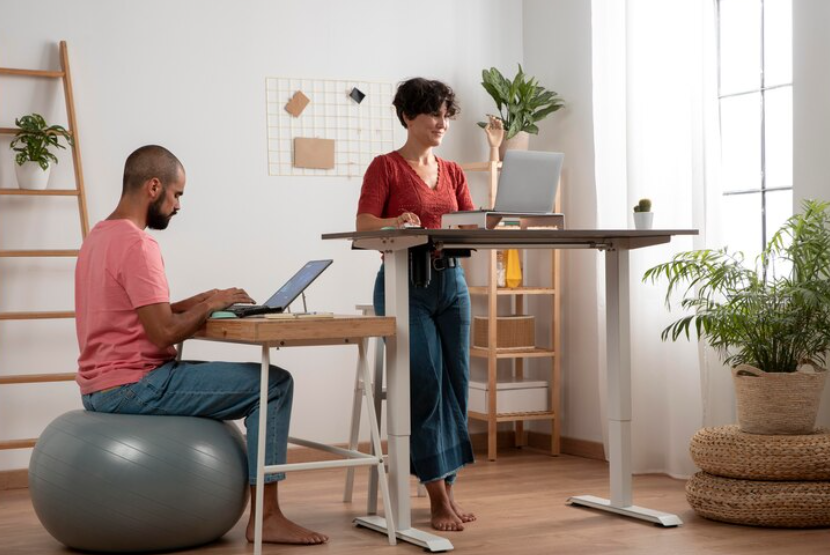
This is where a good adjustable height desk earns its place. Being able to shift from sitting to standing in seconds makes it realistic to actually do it, rather than promising yourself you will move more and never quite managing.
Research suggests these desks can meaningfully cut the time people spend sitting at work, and many users report less back and neck discomfort. They are not a cure-all, but they make the healthier choice the easy one.
There is a focus benefit too. A change of posture can act as a natural reset, helping you shake off the mid-afternoon slump without reaching for another coffee.
Pair the desk with a few basics. Position your screen near eye level, keep your wrists neutral and leave yourself room to move. Do that, and the whole setup starts working with your body instead of against it.
The Part Most People Miss: Tax Time
Here is the bit that often gets overlooked. If you are buying equipment to work from home, some of that cost may come back to you at tax time.
The tax office offers two ways to claim home office running costs. The fixed rate method provides a set hourly deduction for expenses such as energy, phone, and internet costs.
The actual cost method lets you claim work-related expenses, ideal for dedicated offices and higher bills. You choose one method for the year, and you cannot claim the same costs twice.
Either way, bigger items like a desk are treated separately. Items under $300 are usually claimed immediately, while higher-cost assets are depreciated over time.
Self-Employed? You May Have More Room to Move
The rules open up further if you work for yourself. Running a business from home changes what you can claim, and the upfront benefits can be more generous.
For a sole trader, a home office desk can be one of many sole trader deductions worth understanding before tax time. Equipment used to earn business income is generally claimable, and eligible small businesses may be able to write off certain assets sooner rather than over years.
As always, the detail matters and the rules change, so it is wise to confirm your situation with a registered tax agent. A short conversation can be the difference between guessing and claiming with confidence.
The Bottom Line
Your home office is worth treating as a real workspace, not an afterthought. The right desk supports your health and your focus, and the spending behind it can often be claimed back in part.
Set yourself up properly, keep your receipts and records and check the current rules before you lodge. A better workday and a smarter tax return is a combination worth aiming for.
Frequently Asked Questions
Are sit-stand desks actually better for you?
They are not a miracle fix, but research suggests they help reduce the time you spend sitting and can ease some discomfort. The main benefit comes from regularly alternating between sitting and standing.
Can I claim a desk on my tax return?
Often yes, if it is used for work. Furniture and equipment up to $300 can usually be claimed in full in the year you buy it, while pricier items are claimed gradually as they decline in value.
What is the difference between the two home office methods?
The fixed rate method gives you a set amount per hour worked from home and covers running costs like energy and internet. The actual cost method lets you claim the real work-related portion of each expense, but it needs more detailed records.
Do the rules differ if I am self-employed?
Yes. Running a business from home generally gives you more scope to claim equipment and workspace costs, and some assets may be written off sooner. It is worth checking the current rules with a tax professional.