
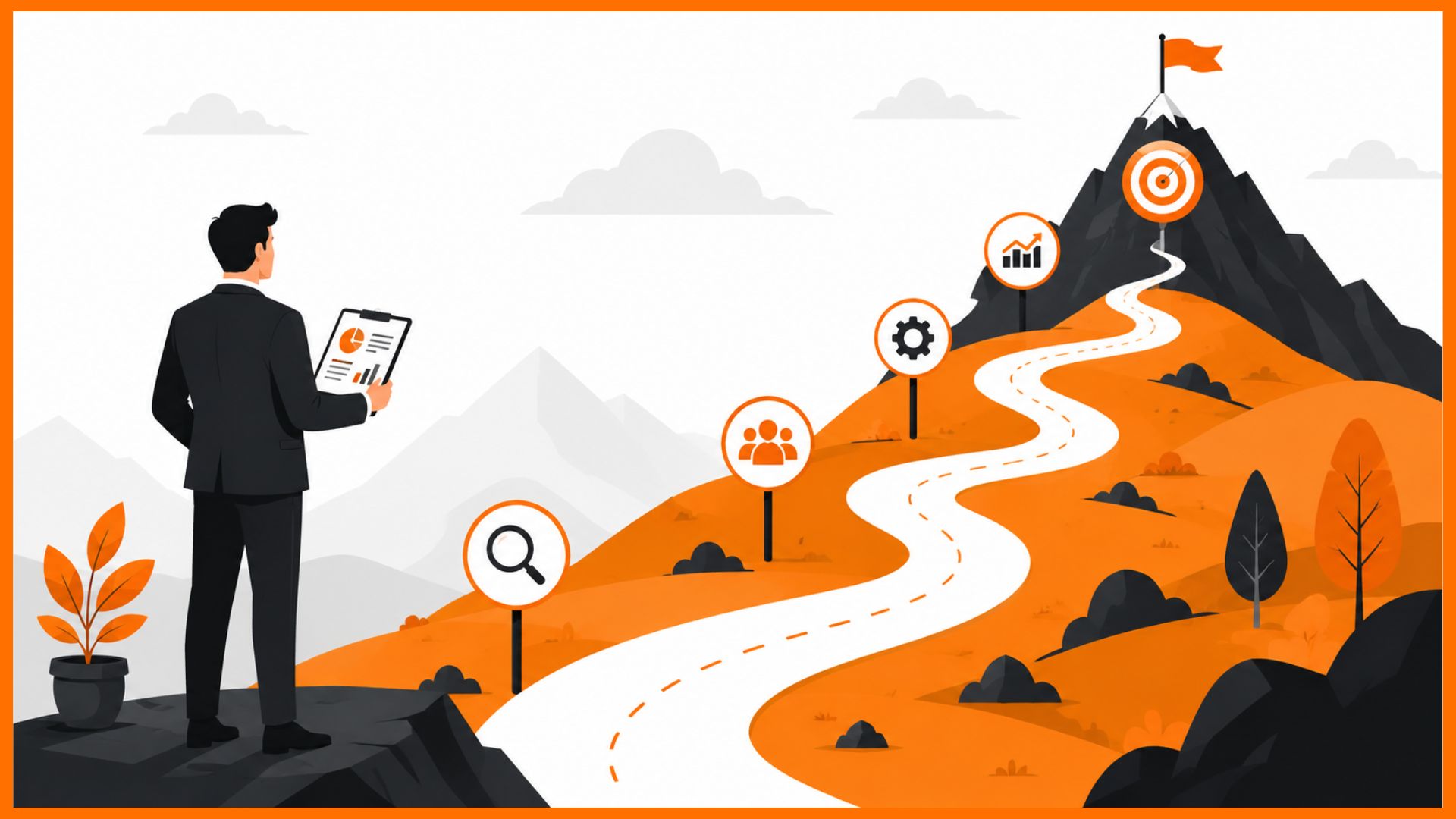
Creating a business strategy is key for companies aiming to hit their long-term goals. It’s a detailed process that makes sure everyone works together towards a shared goal.
A good strategic plan helps companies understand where they stand now. It spots chances and risks, and maps out how to reach their goals.
This way, businesses can make sure they’re all moving in the same direction. It helps them use their full power to succeed.
Key Takeaways:
- Strategic planning is essential for achieving long-term goals.
- A business strategy helps align resources and efforts.
- Analyzing the current situation is key for a roadmap to success.
- A well-crafted strategic plan finds opportunities and threats.
- Unified goals help maximize success.
What is Strategic Planning?
Strategic planning is about setting an organization’s direction and using resources to reach its goals. It’s key to organizational development. It helps companies adapt and stay ahead in a changing world.
This process involves making decisions in a systematic way. It ensures organizations move towards their goals efficiently. It looks at both inside and outside factors to find chances and hurdles.
Definition and Importance:
Strategic planning is a detailed process that sets a company’s mission, vision, and goals. It’s vital for making smart choices and using resources well. It helps guide companies through tough times, keeping them focused on their big goals.
Through strategic planning, companies can make better decisions and focus on what’s important. This boosts their performance and keeps them strong in the market.
Key Elements of Strategic Planning:
The main parts of strategic planning are setting the mission and vision, doing a SWOT analysis, and making a detailed plan. These parts together create a clear path for the future.
The Benefits of Strategic Planning
Strategic planning offers many benefits, helping companies stay ahead. It leads to sustainable growth and success. A well-made strategic plan can change a company’s game. Integrating tools like voicemail services into your communication strategy can also improve customer engagement and streamline internal coordination, supporting broader strategic goals.
One key benefit is better decision-making. Strategic planning helps companies make choices that match their goals. This boosts their chances of reaching long-term goals. In today’s digital landscape, incorporating SEO strategies into the planning process is equally crucial. Platforms like Techimply provide businesses with strategic tools and software comparisons that support smarter digital planning and long-term growth. Similarly, websites like Openai Agents offer access to a wide range of AI tools, AI agents, and the latest AI news, helping businesses stay ahead in the digital landscape. A well-optimized online presence ensures that potential customers can find the business easily, increasing visibility, credibility, and ultimately driving growth through organic traffic.
Enhanced Decision-Making:
Strategic planning encourages smart decision-making. It helps businesses spot chances and hurdles. This makes it simpler to make choices that support their goals.
- Improved clarity on organizational goals
- Better alignment of resources with strategic objectives
- Enhanced ability to respond to market changes
Resource Allocation:
Good strategic planning also means better use of resources. By focusing on key projects, companies can use their resources wisely. This not only cuts down on waste and boosts performance but also ensures accurate documentation and client billing, especially when using tools like a consulting invoice template to streamline invoicing in service-oriented organizations.
- Reduced operational costs
- Increased productivity
- Better return on investment (ROI)
Long-Term Vision:
A solid strategic plan gives a clear long-term vision. It guides the company’s growth and direction. This vision brings everyone together, working towards the same goals.
Having a clear long-term vision helps companies:
- Drive sustainable growth
- Enhance their competitive position in the market
- Achieve their strategic objectives
The Strategic Planning Process
Strategic planning is a detailed process that guides organizations in setting their direction. It helps make informed decisions. This process involves several steps to achieve goals and stay competitive.
Step-by-Step Guide:
The strategic planning process includes several key steps:
- Defining the Mission and Vision: Clearly stating the organization’s purpose and long-term goals.
- Conducting a SWOT Analysis: Identifying strengths, weaknesses, opportunities, and threats to guide strategic decisions.
- Developing Strategies: Creating strategies to use strengths, fix weaknesses, seize opportunities, and counter threats.
- Creating an Action Plan: Outlining specific actions, who is responsible, and when to implement the strategies.
By following these steps, organizations can create a detailed strategic plan. This plan aligns with their overall goals.
Common Pitfalls to Avoid:
While strategic planning is key for success, there are common mistakes to avoid:
- Lack of Stakeholder Involvement: Not engaging stakeholders can lead to a lack of commitment.
- Poor Alignment with Objectives: It’s vital to ensure the plan aligns with the organization’s goals.
- Inadequate Review and Update: Regularly reviewing and updating the plan is essential to keep it relevant.
Knowing these pitfalls helps organizations avoid them. This way, they can create a strong strategic plan for long-term success.
Setting SMART Goals
Effective strategic planning starts with SMART goals. These goals guide organizations toward their long-term goals. By making sure goals are Specific, Measurable, Achievable, Relevant, and Time-bound, businesses can map out their success path.
In addition to setting SMART goals, incorporating digital strategies like content marketing and SEO can further enhance strategic outcomes. Tools and resources available at Saas Adviser can guide businesses in selecting the right SaaS solutions to support their strategic execution. These tools not only boost online visibility but also attract and engage target audiences more effectively. By leveraging top ecommerce tools and aligning digital efforts with strategic objectives, businesses can build stronger brand awareness, generate qualified leads, and maintain a competitive edge in an increasingly digital marketplace.
Specific Goals:
Creating a focused plan begins with specific goals. It’s about clearly stating what you want to achieve. Instead of saying “increase sales,” aim for “increase sales by 15% in 12 months.”
Measurable Goals:
Goals must be measurable to track progress. This means setting clear targets, like “reduce production costs by 10% in 6 months.” Measurable goals help in performance measurement, allowing for adjustments as needed.
Achievable Goals:
Goals must be achievable with the resources you have. Unrealistic goals can discourage and fail. For example, aiming to “double production capacity in 3 months” might be too ambitious. Achievable goals are challenging but realistic, keeping teams motivated.
Relevant Goals:
Relevant goals align with the organization’s mission and objectives. This focus ensures goals are important for success. For example, investing in employee training is relevant if improving customer service is a strategic goal.
By focusing on SMART goals, organizations can improve their strategic planning. This ensures goals are clear, actionable, and in line with their long-term goals.
Conducting a SWOT Analysis
A key step in planning is doing a SWOT analysis. It helps organizations understand their current state and future chances. This analysis is key to spotting the internal and external factors that affect an organization’s goals.
By identifying strengths, weaknesses, opportunities, and threats, a SWOT analysis allows businesses to make informed strategic decisions. It highlights areas where the organization can leverage its strengths and where it needs improvement. Moreover, understanding external opportunities and threats enables proactive planning to mitigate risks and capitalize on emerging trends. This clarity fosters more targeted strategies that align with the organization’s mission and market position.
1. Strengths:
Finding an organization’s strengths is vital. It shows the internal qualities and resources that help achieve success. These can be a strong brand, a skilled team, or new products. Using these strengths, organizations can stand out in the market.
2. Weaknesses:
Spotting weaknesses is also important. It lets organizations tackle internal issues that could slow them down. Weaknesses might be lacking resources, slow processes, or missing skills. By fixing these, organizations can face fewer threats.
3. Opportunities:
Opportunities are external chances for an organization to reach its goals. These could be new market trends, policy changes, or tech advancements. For instance, shifts in global financial alliances, like the emergence of a unified BRICS currency, could impact long-term financial planning. Staying updated with tools such as the BRICS Currency to USD converter can help businesses monitor potential currency fluctuations and adapt their strategies accordingly.
4. Threats:
Knowing about threats is essential for making plans to avoid risks. Threats come from outside, like competition, economic downturns, or rule changes. By seeing these threats ahead, organizations can plan to lessen their effects.
With a detailed SWOT analysis, organizations get a clear view of their market position. They can make smart plans that use their strengths, fix weaknesses, grab opportunities, and face threats.
Engaging Stakeholders in Planning
In strategic planning, engaging stakeholders is key. It makes the planning process more effective. This leads to better strategic plans.
Stakeholder engagement is important for several reasons. It makes sure the plan meets the needs of those affected. It also makes stakeholders feel more involved, leading to more support for the plan.
Importance of Stakeholder Input:
Stakeholder input is very valuable in planning. It gives insights into what stakeholders need and expect. This helps shape the strategic plan.
Using stakeholder input in organizational development makes plans stronger. It makes sure plans are based on real-world needs, including customers, employees, and the community.
Methods for Engagement:
There are many ways to engage stakeholders. Surveys, focus groups, meetings, and digital platforms are some examples. The best method depends on the stakeholders and the goals of the engagement.
Good stakeholder engagement needs careful planning. It’s about finding the right stakeholders, choosing the right methods, and using feedback well in planning.
By being open and inclusive in engaging stakeholders, organizations can make better plans. This increases the chances of successful implementation.
Crafting a Vision and Mission Statement
A well-defined vision and mission statement are key to a successful business strategy. They guide the organization towards its long-term goals. This ensures everyone is on the same path.
To create a compelling vision and mission statement, you need to know your organization’s purpose, values, and goals. The vision statement shows the desired future of the organization. The mission statement explains its purpose and main goals. Tools like an AI humanizer can help refine your wording to make these statements sound more authentic, relatable, and human-centered.
Additionally, these statements play a critical role in shaping the company’s marketing efforts. A clear vision and mission provide direction for brand messaging, helping to build a consistent identity across all marketing channels. They also resonate with customers who share similar values, increasing engagement and loyalty. In essence, strong statements not only guide internal strategy but also attract and retain the right audience through effective marketing.
Vision Statement Essentials:
A vision statement should be short but inspiring. It should give a clear direction for the future. It should be forward-thinking and ambitious, motivating everyone to work together.
- Clarity and conciseness
- A focus on the future
- Alignment with the organization’s values and culture
Mission Statement Essentials:
A mission statement explains the organization’s purpose and main goals. It should be specific, measurable, and achievable. This gives a clear plan for daily operations.
- A clear statement of purpose
- Identification of the organization’s primary stakeholders
- An outline of the organization’s core values and culture
By creating a clear vision and mission statement, organizations can ensure everyone is working towards the same goal. This helps them reach their long-term goals and succeed with a strong business strategy.
Developing an Action Plan
To make strategic plans real, organizations need a detailed action plan. This plan shows the steps to reach the goals. It makes sure the plan is put into action well.
Setting Priorities:
Setting priorities is key in an action plan. It means picking the most important tasks that help achieve the goals. Focus on tasks that match the strategy.
To set priorities well, think about these:
- Check tasks by how urgent and important they are.
- See how each task affects the goals.
- Give the right resources to important tasks.
Assigning Responsibilities:
Assigning tasks is vital in an action plan. It means naming who will do each task. This makes sure everyone knows their part in the plan.
Good ways to assign tasks include:
- Be clear about what each team or person needs to do.
- Match tasks with the team’s skills.
- Have a way to check progress and hold people accountable.
Timelines and Milestones:
Setting timelines and milestones is key to tracking progress. Timelines help finish tasks, and milestones mark progress towards goals.
To make good timelines and milestones:
By setting priorities, assigning tasks, and making timelines and milestones, organizations can make a strong action plan. This plan is key for performance measurement and reaching strategic goals.
Monitoring and Evaluation of Strategic Plans
Monitoring and evaluation are key parts of strategic planning. They help organizations see how they’re doing and change their plans if needed. This keeps the plan up-to-date and helps reach the organization’s goals.
Performance Metrics:
To check on a strategic plan, organizations need clear performance metrics. These metrics help measure how close they are to their goals. Examples include money matters, how happy customers are, and how well things run.
A good system for measuring performance lets organizations see how they’re doing. It helps find areas to get better and make smart choices. It’s important to pick metrics that are important, can be measured, and match the goals.
Review Frequency:
How often to review a strategic plan is very important. Regular checks help see how things are going and make needed changes. The right time for reviews depends on the organization’s size, what it does, and its goals.
Some might review every quarter, while others might do it once or twice a year. Finding the right balance is key. It’s important to give the plan enough time to work but also be ready to change quickly if needed.
By keeping an eye on their strategic plans, organizations can make sure they’re on the right path. This means not just looking at numbers but also doing deep analyses, like SWOT analysis. This helps understand the organization’s strengths and weaknesses and make smart choices.
Adapting to Change: Importance of Flexibility
As markets keep changing, being flexible in planning is key. Companies need to adapt quickly to changing market conditions to stay ahead.
Being flexible means being ready to change with the market, what customers want, and new tech. This means always doing market analysis to know what’s new and what’s coming.
Recognizing Shifts in the Market:
It’s important to spot changes in the market to adjust plans on time. This means watching market trends, what customers like, and what rivals are doing. This helps find chances and dangers fast.
Adjusting Strategies:
After seeing market changes, companies must be ready to change their plans. This could mean moving resources, changing goals, or using new tech to keep up.
Being flexible and quick to change helps companies not just survive but do well in a fast-changing world. This way, they can get a competitive advantage.
Communicating the Plan Effectively
The success of a strategic plan depends on how well it’s shared with the right people. Good communication makes sure everyone knows the goals. This is key for organizational development.
Target Audiences:
Finding out who needs to know is the first step. Different people have different needs and levels of understanding. For example, the board might want a quick summary, while team members need more details.
Knowing who you’re talking to helps make the message clear and interesting. This makes it easier to put the plan into action.
Communication Channels:
Choosing the right way to share the plan is just as important as the plan itself. You can use emails, meetings, or reports to share the plan. The goal is to pick the best way to reach your audience.
Using both digital and in-person methods can reach more people. Newsletters or intranet posts can keep everyone updated and involved.
By using the best communication channels, you can build a culture of openness and inclusion. This is essential for making the strategic plan work.
The Role of Leadership in Strategic Planning
Leadership in strategic planning is more than just making decisions. It’s about building a culture that moves business strategy forward. Good leaders help their teams work towards long-term goals. They make sure everyone’s efforts help reach these goals.
Leaders are key in setting an organization’s strategic direction. The right leadership style can motivate teams, spark innovation, and keep the organization flexible in a fast-changing world.
Leadership Styles that Foster Success:
There are leadership styles that really help with strategic planning. Some of the best ones are:
- Transformational Leadership: This style pushes for new ideas and change. It inspires teams to work together towards a common goal.
- Servant Leadership: This style puts team members first. It creates a team environment that supports strategic planning.
- Participative Leadership: This style involves team members in making decisions. It makes sure strategic plans are well-supported and complete.
Creating a Culture of Strategy:
Building a culture that supports business strategy is key for long-term goals. This means:
- Sharing the strategic vision clearly with everyone.
- Aligning the organization’s structure and processes with the plan.
- Creating a culture of accountability, where everyone works towards the strategic goals.
By choosing the right leadership style and building a strategic culture, organizations can reach their long-term goals. They can also ensure lasting success.
Case Studies in Strategic Planning
Case studies help us see how strategic planning helps reach goals. They show both wins and losses. This way, companies can make their planning better.
Success Stories:
Many companies have grown and innovated thanks to strategic planning. For example, a tech firm used SWOT analysis to find new markets. This led to a big jump in their market share.
Lessons from Failures:
Not every strategic plan works out. But looking at what went wrong can teach us a lot. For instance, a company that didn’t listen to its stakeholders made a plan that didn’t meet customer needs.
The importance of stakeholder engagement is huge. It makes sure the plan is real and supported by those who will do it.
- Involve stakeholders early in the planning process.
- Use feedback mechanisms to ensure continuous input.
- Foster a culture that values strategic planning.
Tools and Resources for Strategic Planning
Organizations can boost their strategic planning by using software and joining professional groups. These tools help streamline planning, make better decisions, and reach goals more effectively.
Good strategic planning includes analysis, making a plan, and putting it into action. To help with these steps, many tools and resources are available, including free social media management & marketing tools that enhance brand visibility and help monitor audience engagement in real-time.
Software Solutions:
Software is key in today’s strategic planning. It offers many features, like analyzing data, measuring performance, and managing projects.
- Strategic Planning Software: Tools like Strategic Planning Software help businesses make, follow, and check their plans efficiently.
- Performance Management Tools: Tools like Performance Management Tools let companies track how they’re doing against important goals, helping make informed choices.
- Collaboration Platforms: Sites like Slack, Productive and Trello make teamwork better, ensuring everyone is working towards the same goals.
- Networking Solutions: Digital tools like Uniqode’s business cards simplify contact sharing and tracking, supporting streamlined networking and aligning with modern strategic goals.
The table below shows some top software for strategic planning:
Professional Organizations:
Professional groups also help a lot with strategic planning. They offer advice, training, and chances to meet others in the field, all of which can make planning better.
Some important groups include:
- Strategic Management Society: Offers resources, events, and networking for strategic management.
- Project Management Institute: Provides certifications, training, and best practices in project management, which is closely related to strategic planning.
By using these tools and joining groups, businesses can make better business strategies and measure their performance better, leading to success over time.
Future Trends in Strategic Planning
Today’s business world is complex, and staying ahead in strategic planning is key for success. Understanding the market and gaining a competitive edge are vital. These are the cornerstones of effective planning.
Digital transformation and sustainability are two major trends in strategic planning. Digital transformation changes how businesses work, making tech use essential for innovation and efficiency. For example, adopting generative AI development services can empower companies to automate complex workflows, create personalized customer experiences, and unlock new business models. By leveraging these advanced AI capabilities, businesses can improve their market analysis and stay competitive.
Sustainability is also a big deal in planning. As people care more about the environment and social issues, businesses must include sustainability in their plans. This approach helps companies stay relevant, contribute to a greener future, and achieve long-term success.