

The Australian Financial Review reported on 16 November 2026 that Treasurer Jim Chalmers planned to consult on tax simplification for sole traders and employers, which could lead to annual business tax savings. The measures are still proposals; they haven’t changed the rules businesses currently follow.
Quick Answer:
Chalmers’ proposed reforms could bring businesses an estimated A$52 million in annual savings, subject to consultation and implementation. During consultation, assess how accounts payable automation software can reduce repetitive invoice entry, coding and approval work before invoices reach your accounting system. You still need to keep accurate tax records and lodge returns under the existing rules.
Contractor prefilling and small-benefit FBT changes head to consultation
Contractor-income prefilling and simpler fringe benefits tax (FBT) treatment deal with different paperwork. The proposed prefilled contractor income for sole traders deals with income reporting; the FBT proposal covers benefits valued below A$300. Consultation will need to spell out how prefilling would work and what simpler treatment would mean for employers.
Prefilling means your return already contains information when you start filling it in. Sole traders need to know which income data would appear, and how they’d put a mismatch right. Don’t assume the small-benefit proposal is a blanket exemption or a reason to stop recording staff benefits.
Chalmers and Finance Minister Katy Gallagher are also working on a second regulation-reduction package for the 2027 budget. Businesses have another policy milestone to watch, but announcing a budget measure isn’t the same as putting a rule into effect. The reported consultation plan doesn’t set a start date for either of the tax measures.
Sole traders and employers have different preparation tasks
Review your workflow against the existing tax rules, and keep proposed policy apart from the settings you use now.
For sole traders, the distinction is income versus spending. Contractor-income prefilling covers money earned; accounts payable covers supplier bills you owe. Your purchase records won’t tell you whether reported contractor income is accurate. Keep that income check separate, using your sales records and supporting payment information rather than the invoices still waiting for payment.
An employer’s approved supplier invoice records a purchase, but it doesn’t resolve a staff benefit’s FBT treatment on its own. The person assessing that treatment needs details such as who received the benefit and why the employer provided it. Keep those details with the transaction.
How accounts payable automation software works for a small business
Accounts payable automation software captures data from supplier invoices and applies accounting codes. It sends invoices to authorised approvers, then posts approved entries to an accounting or enterprise resource planning (ERP) system. This gives a small business a digital workflow instead of repeated rekeying, while people stay responsible for disputed or unclear invoices.
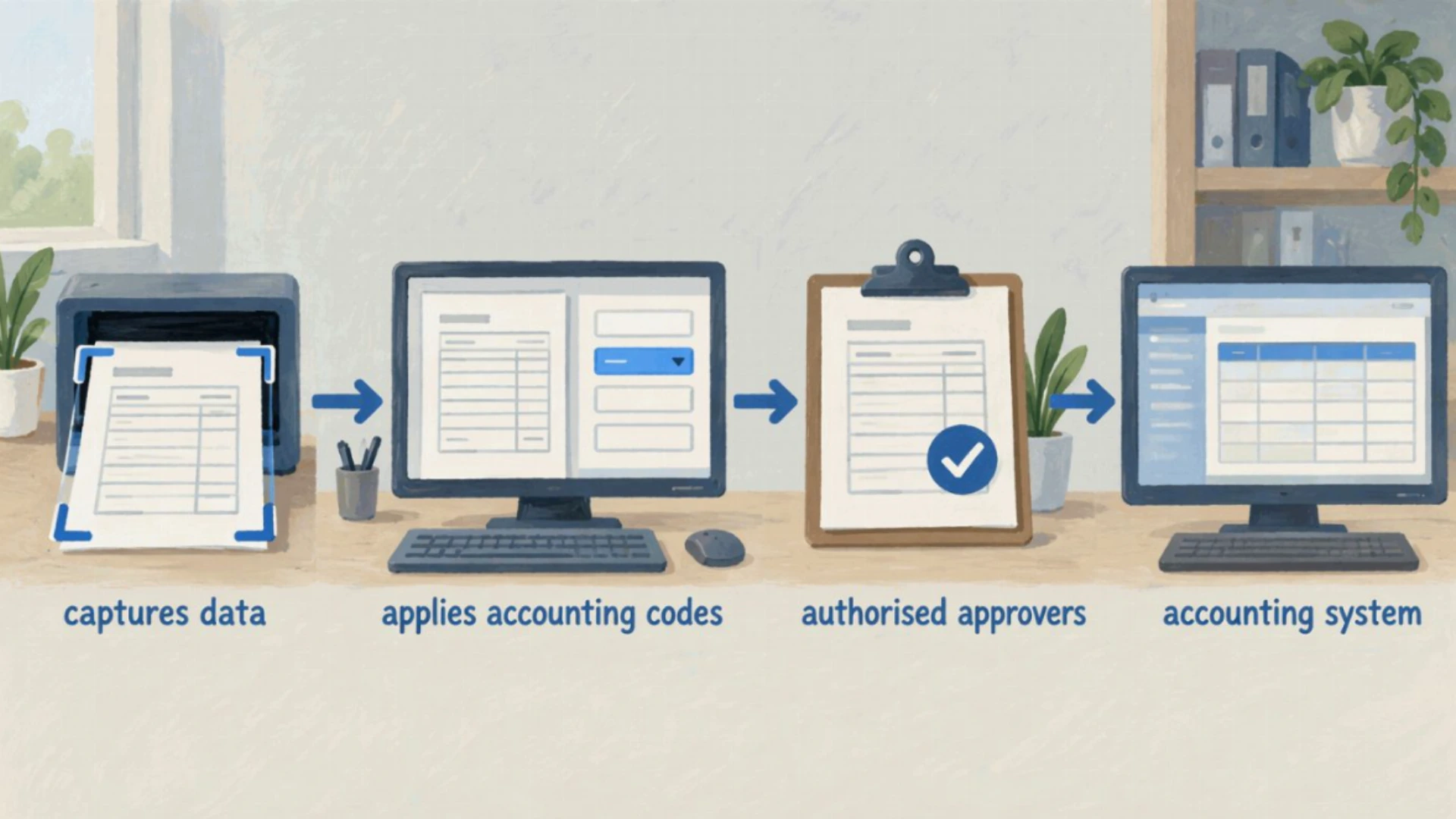
The software can capture a supplier’s maintenance invoice as a draft record, for example, so staff don’t have to enter it in the ledger again. An account code assigns the cost to the chosen expense category. A spending rule directs the invoice to the manager who can approve that amount. The software then posts the record and its tax code to the accounting system once a manager approves it.
Approval and payment are still separate decisions. Posting an invoice records it in the accounts, but it doesn’t mean you’ve paid the supplier. Your workflow needs to distinguish between an invoice awaiting approval and an approved bill ready for payment.
Benefits depend on less rekeying and clearer approval status
Accounts payable process automation chiefly reduces repetitive data entry and makes approval status clearer. ACARP’s 2024 Accounts Payable Automation Trends report, published on 28 June 2024, found that 52% of AP professionals spent more than 10 hours each week processing invoices, down from 62% in 2023. Those figures describe workloads; they don’t tell you what savings to expect. Test the potential gain using recurring supplier bills where staff currently enter the same account code every month.
Invoice approvals need clear ownership and connected records
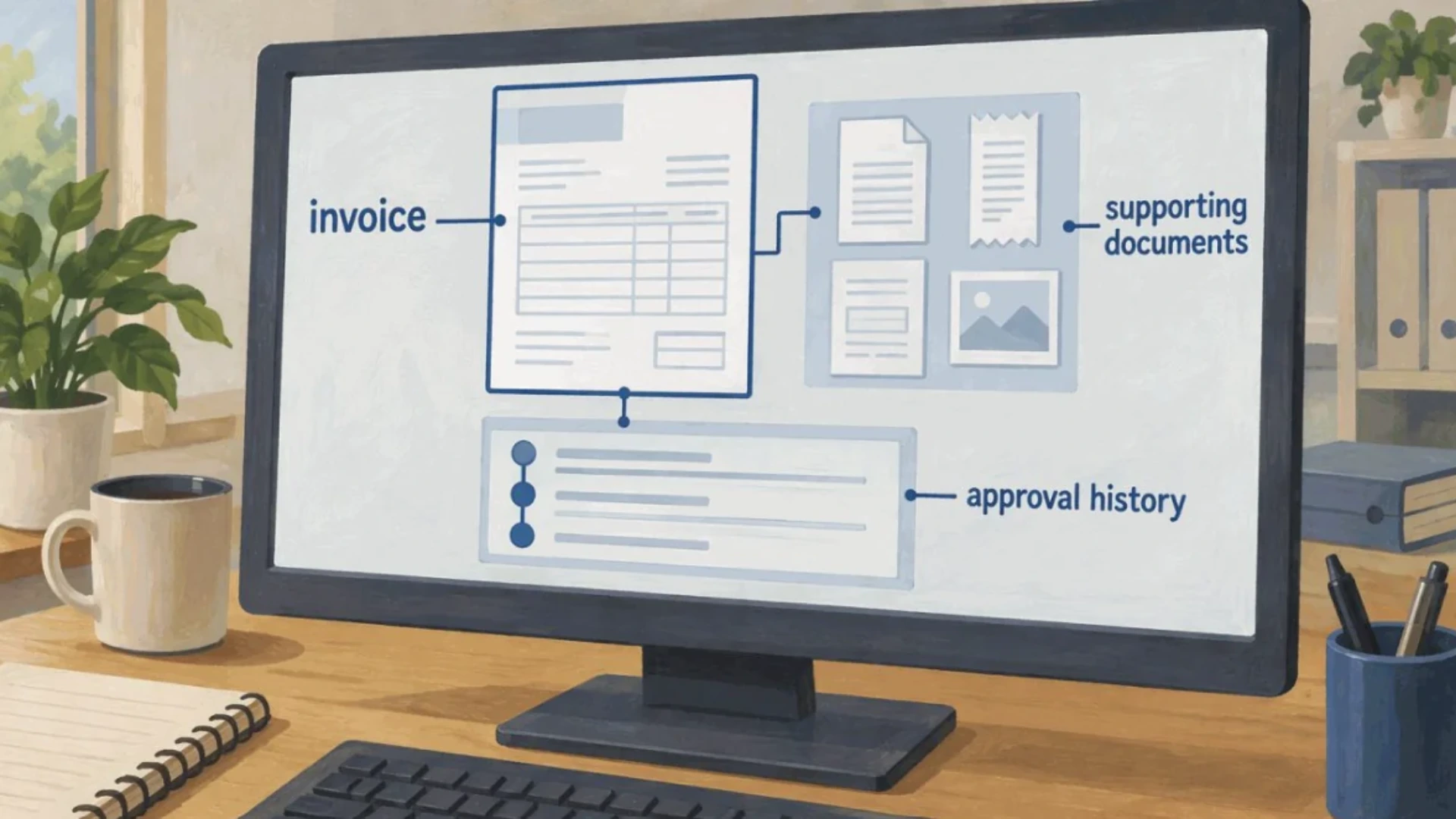
Give each invoice a named owner and keep the supporting documents with its approval history, so approvals and recordkeeping run more smoothly. Your workflow should make clear who needs to act next and what happens when the usual approver is away. A disputed invoice needs a defined route, not another email chain.
Check the hand-offs before changing the workflow
Check your business technology and tax-accounting workflows for gaps between invoice approval and your ledger. Use a completed billing period as your sample and follow ordinary invoices alongside the disputed ones. Record where staff copy information between systems and where a decision happens outside the invoice record.
| Checkpoint | What to test | Record to retain |
|---|---|---|
| Process ownership | Name the invoice owner and a backup approver. | Responsible person and escalation path. |
| Duplicate checks | Compare invoice numbers and supplier IDs before posting. | Flagged match and decision to release or reject it. |
| Tax coding | Check the expense account and GST code against the transaction. | Code used and explanation for any manual change. |
| Audit trail | Keep the source invoice attached to its approval history. | Dated approval record with subsequent corrections. |
| Exception handling | Route missing information or disputed amounts to a named person. | Reason for the hold and evidence used to resolve it. |
Ardent Partners’ 2024 ePayables Study, authored by Andrew Bartolini, found that only 32.6% of B2B invoices completed straight-through processing without human intervention. You should therefore test how the system handles exceptions: check how a rejected invoice returns to its owner and how the system records the reason. Try a bill that’s missing a purchase-order reference and check who receives it.
Record a baseline over a short period before making changes to the workflow. Record handling time apart from time spent waiting for approval, and count the invoices returned for correction. Test those same measures after a change so faster posting doesn’t conceal a growing queue of unresolved bills.
Before the budget, watch for scope and commencement details
Before the next federal budget, watch for consultation documents spelling out who the proposals cover and how businesses can respond. The useful details for contractor prefilling are the source of the income data and how to correct it. The FBT detail you’re looking for is the exact treatment of qualifying benefits and the records you’ll still need.
Keep a short policy log that separates proposals from final decisions. Record the stated commencement date when one is set, together with the return or reporting period affected. Your finance lead can then tell the accountant exactly what changed instead of relying on a headline.
Give a specific example of an administrative burden if you contribute to consultation. Describe the information you enter twice and the check that has you reopening a completed record. Keep that tax-reporting burden apart from problems caused by an internal approval queue, so your submission addresses the proposed measure.
Chalmers’ plan makes tax administration part of the reform agenda, but you still control your invoice processes. Keep meeting your current obligations while you cut avoidable handling and make decisions traceable.