

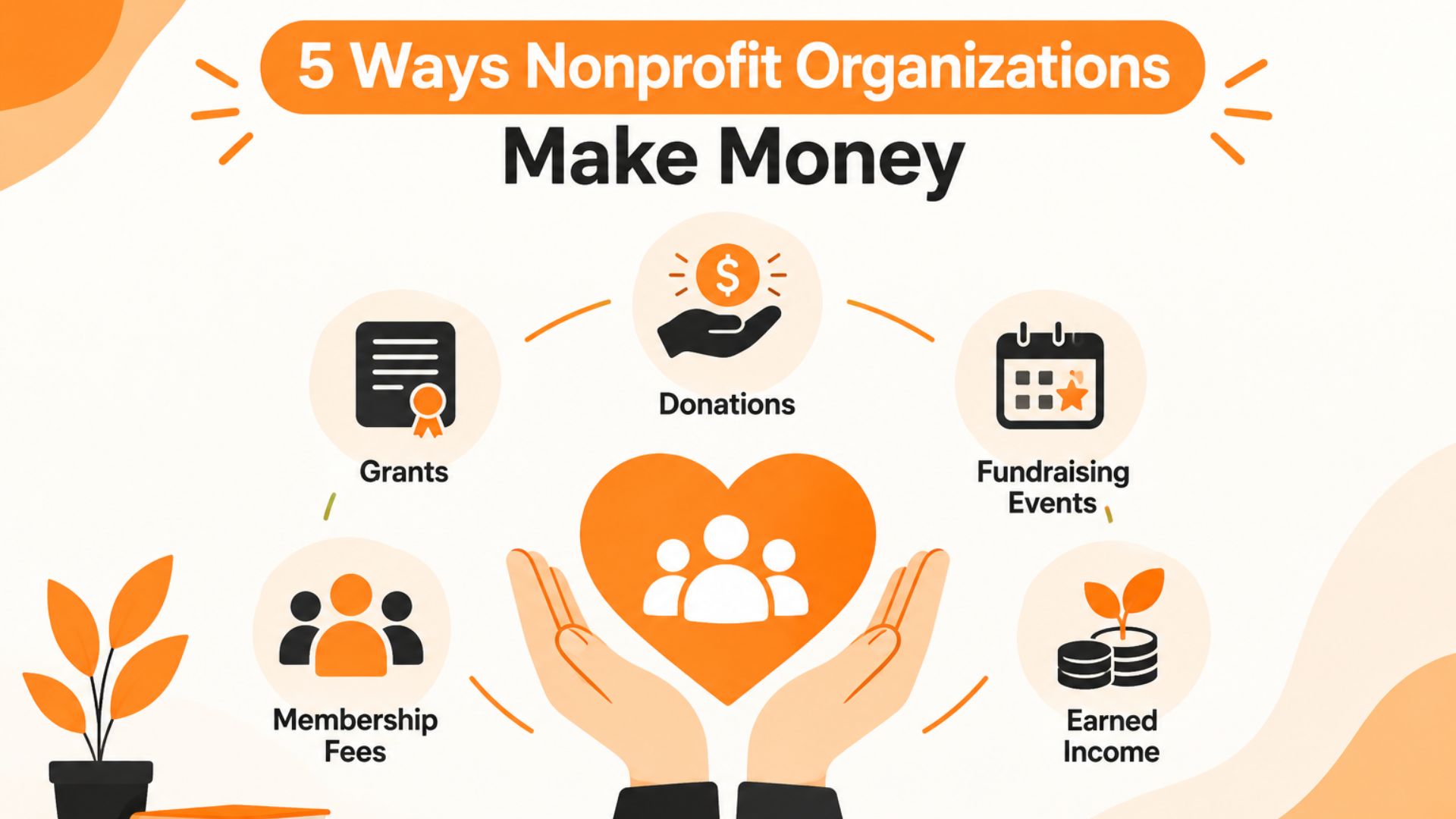
Although nonprofit organizations do not exist to distribute profits, they still need reliable income to pay staff, cover operating expenses, and support their missions. Relying on a single funding source can create financial risks if donations decline or grants become unavailable. Diversifying revenue streams helps nonprofits maintain stability and continue serving their communities. By combining different funding methods, organizations can strengthen their finances and plan for long-term growth. This article explores five ways nonprofit organizations make money to sustain their operations and maximize their impact.
What are Nonprofit Organizations?
Nonprofit organizations are entities established to support a social, charitable, educational, religious, or community-focused mission rather than generate profits for owners or shareholders. They earn money through donations, grants, fundraising activities, and other sources to fund their operations and achieve their goals. Although nonprofits can generate surplus revenue, they generally reinvest it into their programs and services instead of distributing profits to private owners. Their financial sustainability depends on responsible management, transparency, and effective funding strategies.
5 Ways Nonprofit Organizations Make Money
1. Individual Donations:
This includes contributions from general supporters, recurring donors, and major givers who want to support a cause they care about. These donations can take several forms, including:
- Online donations
- Recurring donations
- Corporate donations
- In-kind donations
- Major gifts
Do not forget to retain existing donors. You can easily do this by keeping them informed about how their contributions have been utilized. This helps individuals who support your cause see the value of their contributions.
2. Earned Income:
There are many ways organizations can earn income, provided these activities comply with applicable laws. This helps them stay afloat and build financial resilience. It also lowers dependence on donations and grants. Organizations can earn money by doing the following:
- Selling branded merchandise or products made through a community program
- Charging fees for training sessions
- Collecting membership dues
- Renting equipments
- Charging admission fees
To make sure you are making a profit, factor in the cost of generating this revenue. For example, selling products may involve inventory, staffing, marketing, and delivery expenses. It is also smart to consult with an accountant to avoid tax complications later.
3. Investments:
Some nonprofits invest a portion of their extra funds to build assets and support long-term financial goals. Rather than serving as a primary source of income, investment can be used to complement other sources. Common options include stocks, mutual funds, endowments, and ETFs. You can also explore the EX 20 fund to check if it is the right strategy to diversify your portfolio.
Be sure to consider donor restrictions, governing documents, investment policies, and ability to tolerate investment risks. Consulting a qualified investment adviser can help make informed decisions.
4. Grants:
Grants provide funding to support particular causes, programs, or community initiatives. Depending on the grant, funding may come from government agencies, charitable foundations, and community foundations. They often come with specific eligibility criteria and conditions. Some only cover a defined project, while others may support broader organizational activities. This makes it hard to be approved for a grant, and it may take longer.
When applying for grants, focus on opportunities that align with your mission and capabilities. This will also help create a strong sales pitch. Pay close attention to applications and reporting requirements. Many restrict how funds can be spent.
5. Fundraising Events:
Fundraising events allow nonprofits to raise money and at the same time connect with the community. These events can range from small community gatherings to larger campaigns depending on the organization’s mission and audience. Popular options include:
- Charity walks
- Auctions
- Benefit dinners
- Sponsored challenges
- Online fundraising events
Organizations can also partner with local businesses to secure donated supplies, venues, or services. This will help reduce the cost of hosting an event. To organize a successful fundraising event, consider hiring experts with the right skill set. Also, ensure you advertise the event well in advance to attract more attendees. Clearly explain the event’s purpose, how the funds will be utilized, and how to participate.
Endnote
Nonprofit organizations make money through various revenue streams, each offering unique benefits and challenges. From individual donations and grants to fundraising events, membership fees, and earned income, these five methods help nonprofits support their missions and maintain financial stability. The right approach depends on an organization’s goals, resources, and community needs.
Diversifying revenue streams reduces dependence on a single funding source and helps nonprofits manage unexpected financial challenges. By combining sustainable funding strategies with transparent financial management, nonprofit organizations can strengthen their operations, expand their services, and continue making a meaningful difference in the communities they serve.