
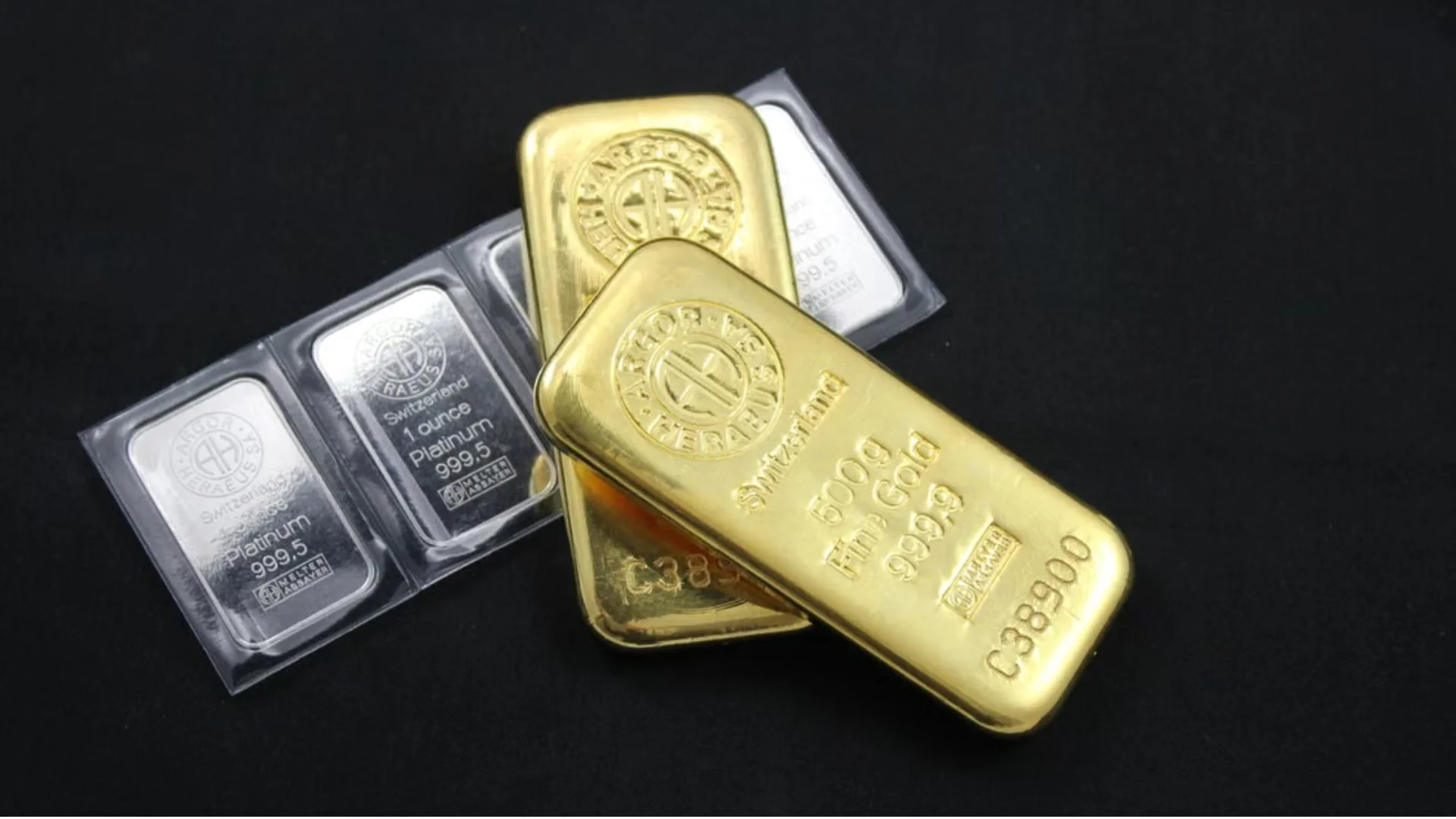
Australian self-directed investors can hold precious metals through brokerage accounts, SMSFs, or personal ownership, but the rules, costs, and responsibilities differ for each route. In Australia, interest in gold and silver often rises when the dollar weakens, or markets wobble, which is also the least convenient time to learn how metal markets work.
Before committing money, an investor therefore needs to understand what is being bought, how it will be held, and which expenses and obligations come with that choice. The practical question is not simply whether precious metals deserve part of a self-managed portfolio, but what needs to be understood before buying.
Where Precious Metals Fit in a Portfolio
Precious metals belong in a portfolio as a small diversifier, not as its main growth engine. For many Australian self-directed investors, a single-digit percentage allocation is a practical starting point, while a larger position becomes a conviction bet rather than portfolio diversification.
Metals produce no income, dividends, or earnings, so returns depend entirely on price movement. That limits the role they can sensibly play, particularly when price volatility tests an investor’s willingness to hold.
Instead, their attraction lies in behaving differently from shares during some market sell-offs. World Gold Council research identifies gold’s diversification characteristics during periods of stress, supporting its reputation as a safe-haven asset without suggesting that it will outperform productive assets over every long holding period. That distinction should shape an allocation from the outset.
Why Each Metal Moves for Different Reasons
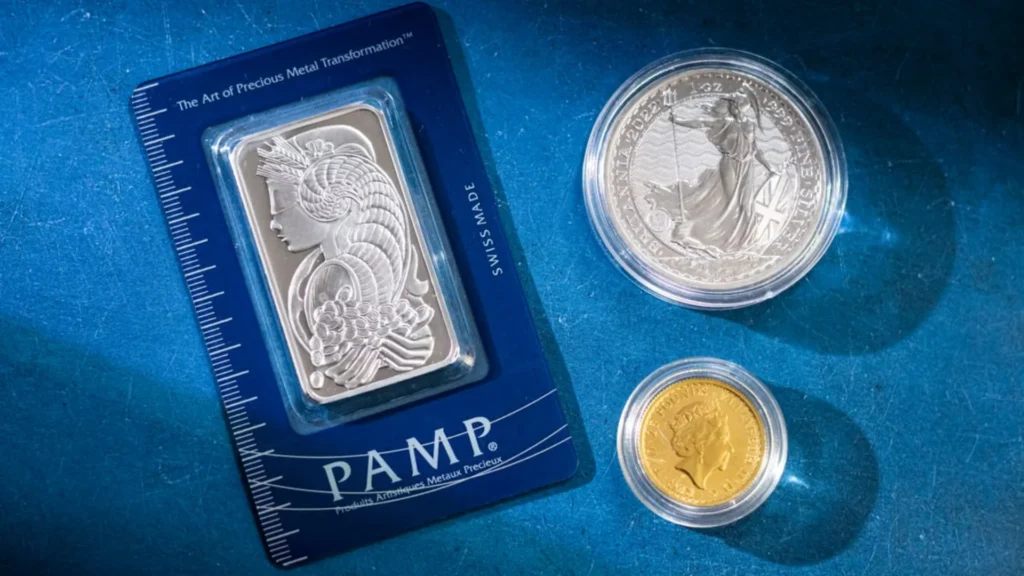
Treating gold, silver, platinum, and palladium as interchangeable is a common beginner error. They share the precious-metals label, but their prices respond to different buyers, economic conditions, and supply constraints, so owning several does not automatically create meaningful diversification.
Gold, Central Banks and Safe-Haven Demand:
Gold demand comes from investment, jewellery, and reserve purchases by central banks. Its price is therefore influenced more by monetary expectations and investor behaviour than by demand from a single manufacturing sector.
When confidence in equities or currencies weakens, investors often treat gold as a defensive holding. World Gold Council research discusses gold’s diversification characteristics, particularly its historical relationship with equities during market stress. Gold is not immune to losses, but this behaviour explains why investors generally assess it as a hedge rather than an industrial commodity or long-term growth asset.
Silver, Platinum and Palladium in Industry:
Silver combines investment demand with industrial applications, including electronics and solar manufacturing. The Silver Institute tracks both sides of the market, helping explain why silver can weaken alongside manufacturing activity even when gold rises on defensive demand.
Platinum and palladium have narrower demand profiles. Both are platinum group metals with significant links to autocatalysts, so vehicle production, emissions technology, and metal substitution can strongly affect their markets.
These markets are also thinner than the gold market, resulting in wider trading spreads and sharper price swings. Accordingly, platinum and palladium are concentrated industrial positions rather than direct substitutes for gold. There is no universally “best” metal because each serves a different portfolio purpose.
Ways to Get Exposure From Australia
Every access route creates exposure to the underlying metal price, but each carries different costs, liquidity, custody, and counterparty risk. The relevant comparison is therefore between ownership structures, not merely quoted prices.
Buying Bullion Bars and Coins Outright:
Physical metal ownership removes issuer exposure and ongoing management fees, but the owner becomes responsible for storage, insurance, authenticity, and resale. Bullion bars and coins are measured in troy ounces, while purity and fineness indicate how much precious metal a product contains.
Recognised products generally attract more potential buyers than obscure bars. Perth Mint cast bars, 1 oz Australian Kangaroo gold coins, and other sovereign-mint coinage use familiar weights and specifications, which can reduce resale friction. The Australian Kangaroo gold coin is a clearly identified mint product rather than an unverified piece of metal.
Investment-grade gold is commonly 99.5 per cent fine or better. Jewellery gold differs because 9-, 14-, and 18-karat pieces contain alloys and carry fabrication markups that sellers rarely recover. Jewellery may have personal or collectible value, but it does not function like bullion as a straightforward store of value.
ETFs, Mining Stocks and Leveraged Products:
ASX-listed metal ETFs provide trading liquidity without requiring personal storage. In return, investors pay an annual fee and depend on the fund issuer, custodian, and documented structure.
Mining shares are not equivalent to bullion. They are operating businesses exposed to management decisions, extraction costs, financing, political conditions, and balance-sheet risk. A metal price can rise while a poorly run miner underperforms.
CFDs and futures add borrowing exposure, funding costs, and expiry or margin mechanics, making them trading instruments rather than passive holdings. SMSFs add rules affecting who controls and stores fund assets. Anyone setting up an SMSF needs to separate personal possession from compliant fund ownership. These choices should also fit the investor’s broader self-directed investment strategies.
The Costs Nobody Quotes You Upfront
The quoted metal price is only the starting point. Entry premiums, resale discounts, storage, insurance, and record-keeping determine the actual break-even point and can materially affect the result.
Premium Over Spot and Dealer Spreads:
Physical buyers usually pay a premium over the spot price and sell below the equivalent retail price. A new position therefore starts behind by the width of that spread and needs favourable price movement merely to break even.
Product size also changes the calculation. Small coins cost more to manufacture, package, and distribute per troy ounce, so their percentage markup is generally higher than that of larger bars. Kilo bars reduce the premium per ounce but make partial selling difficult. A suitable size balances acquisition costs against the ability to sell part of the holding when needed.
Home Storage, Allocated and Unallocated:
Home storage avoids custody fees but transfers storage and security risks to the owner. Standard home and contents insurance can place tight limits on bullion unless it is declared and separately scheduled, so a household safe does not guarantee adequate cover.
Allocated storage means identified metal, often recorded by serial number, is held for a particular owner. Unallocated storage represents a claim against a pooled metal account rather than title to specific bars or coins. That distinction matters if a custodian becomes insolvent. Allocated holdings usually cost more because the provider must segregate and account for the metal.
Records, the ATO and Capital Gains:
Buying gold is not automatically invisible to the ATO. Dealers can have identity, transaction-record, and reporting obligations, while banks retain transfer records. Exact obligations depend on the transaction and surrounding circumstances, but cash or physical ownership should not be mistaken for anonymity.
Metal acquired as an investment is generally treated as a capital gains tax asset. Investors should retain the acquisition date, purchase price, premium paid, invoices, ownership records, and relevant storage costs from day one. Tax treatment can differ according to ownership structure, purpose, and individual circumstances, so this is general information rather than personal tax advice.
Setting Expectations Before You Buy
Nobody can reliably identify which metal will outperform next year. A confident claim that one is about to boom often says more about the seller’s incentive than the metal’s future.
The decisions an investor can control are more useful: how large the allocation will be, which metal matches the intended role, and whether physical ownership, a listed fund, or another structure carries acceptable costs and risks.
Precious metals work best when judged by what they contribute during difficult periods, not by whether their headline price beats shares in a particular year. If portfolio diversification is the objective, a measured allocation and suitable holding route matter more than attempts to predict short-term price volatility.