
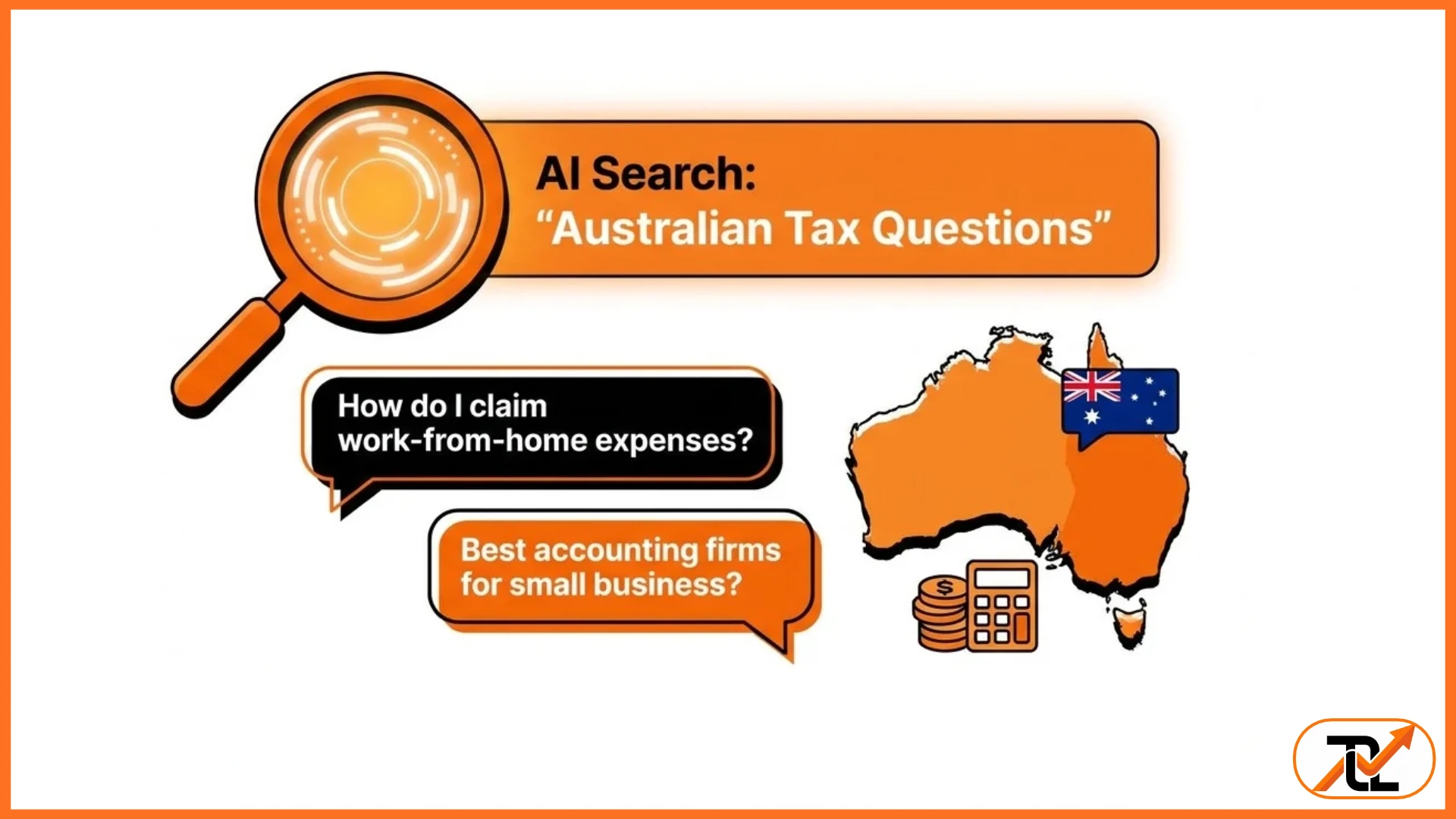
Five years ago, most people found their accountant through a referral or a quick Google search. Today, more of them start with a chatbot. Australians are typing tax questions into ChatGPT, Gemini and Google’s AI Overviews long before they call a professional.
These tools don’t return a plain list of links for people to sort through. They write a single answer and sometimes name the sources behind it. A firm cited in that answer gains attention before the person compares any websites. A firm left out of the answer may never enter the conversation at all.
The firms showing up in those AI answers aren’t always the biggest. They’re usually the ones whose websites answer questions clearly. This guide covers how AI tools choose sources and which website content they favour.
Key Takeaways
- Many Australians now ask AI tools tax questions before they contact an accountant.
- AI tools pull their answers from websites they consider clear, current, and trustworthy.
- Accounting firms can improve their chances of being cited by answering real client questions in plain English and updating content each financial year.
- AI can explain general tax rules, but it can’t replace a registered tax agent for personal advice or lodgement.
Why Are Australians Asking AI About Tax?
It’s convenient. It’s 10 pm, the kids are asleep, and someone finally sits down with a shoebox of receipts. They don’t want to wait until Monday to ask whether their new laptop is deductible. An AI tool gives an instant answer in plain language, and they can keep asking follow-up questions.
Some of these questions are basic. People want to understand how income tax works in Australia before they deal with their first return. Others are specific, like how capital gains tax applies to an inherited property.
The problem is that AI tools can be confidently wrong. They sometimes mix up Australian and US rules. They may quote rates from a previous financial year. Australian tax settings can change every 1 July, and an AI answer is only as good as the sources behind it.
That gap is where accounting firms come in. Fonthip Ward, founder of Search Studio SEO Agency in Brisbane, sees this shift across the professional services businesses she works with. The firms showing up in those AI answers aren’t always the biggest. They’re usually the ones whose websites answer questions clearly.
What Tax Questions Go to AI First?
Patterns vary, but these types of questions commonly start in an AI tool:
- Deductions: “Can I claim my home office if I work from home two days a week?”
- Deadlines: “When is my tax return due if I use an accountant?”
- Business structure: “Should I be a sole trader or a company?”
- Property: “Do I pay CGT if I sell my investment property?”
- Choosing help: “Do I need an accountant for a simple tax return?” or “Good tax accountant near me?”
That last group matters most to firms. When someone asks an AI tool to recommend an accountant, the answer often names specific businesses. Being one of those names is the new version of a word-of-mouth referral.
How Do AI Tools Decide Which Sources to Use?
There’s no form to fill in and no fee to pay. Each tool works a little differently. Google’s AI Overviews tend to draw on pages that already perform well in Google search. Tools like ChatGPT and Perplexity search the web and often cite the pages they used.
There’s no published formula. But some patterns show up again and again in which sources get cited:
- Clear, direct answers. Pages that answer the question in the first paragraph or two.
- Current information. Content that names the financial year and uses up-to-date figures.
- Visible expertise. A named author with real credentials, not an anonymous “admin”.
- Consistent business details. The same name, address, and services across the website, Google Business Profile, and directories.
- Mentions elsewhere. Reviews, industry listings and articles on other websites that reference the firm.
None of this is new. It’s largely what good SEO has always asked for. AI search just makes the gap between clear and vague content more obvious.
What Can Accounting Firms Do to Show Up in AI Answers?
Answer the questions clients actually ask
Start with the inbox. The questions clients email every July are the same questions people type into AI tools. Turn each one into a short page or FAQ section on the website. “Can I claim my phone bill?” is a better page title than “Our Deduction Services”.
Put the answer first
Accountants are trained to give context before conclusions. Online, that works against them. Lead with the short answer, then explain the conditions and exceptions. AI tools and busy readers, both reward this.
Update content every financial year
A deduction guide from 2022 still sitting on a firm’s website is a liability. Review key pages after each budget and every 1 July. Add the financial year to page titles where it makes sense, and update the date on the page when the content genuinely changes.
Show who wrote it and why they’re qualified
Tax is a high-stakes topic. Search engines and AI tools tend to favour content from people with clear expertise. Name the author. List their qualifications. Show the firm’s tax agent registration number. Readers can check any registration on the TPB public register, and displaying it is a simple trust signal for people and machines alike.
Keep business details consistent everywhere
If a firm’s address differs between its website, Google Business Profile, and a professional directory, AI tools may struggle to work out which information is correct. Check every listing once a year. It’s a dull job that pays off.
Earn mentions beyond your own website
AI tools look for signs that other people trust a business. Client reviews, local business awards, contributions to industry publications, and community sponsorships all count. A firm that’s only mentioned on its own website is harder for an AI tool to recommend with confidence.
What Should Accounting Firms Avoid?
Mass-producing AI-written tax content. It’s tempting to generate fifty blog posts in an afternoon. But a wrong figure on a tax firm’s website is a credibility problem, and possibly a professional one. If AI helps with drafting, a qualified person needs to check every number.
Chasing tricks. Hidden text, keyword stuffing, and pages written “for the robots” don’t work well in traditional search, and there’s no good reason to think they’ll work in AI search either.
Dropping traditional SEO. AI search builds on the same foundations as Google search. A firm that disappears from regular search results is unlikely to appear in AI answers.
Is AI a Threat to Accountants?
Not really. It’s more of a filter.
AI tools are good at explaining general rules. They’re not good at knowing someone’s full financial situation, spotting what a client forgot to mention, or taking responsibility for advice. Generally, only registered tax agents can charge a fee to prepare and lodge tax returns for clients. A chatbot can’t do that.
What AI does change is the type of enquiry that reaches a firm. Simple “what is” questions get answered online. The people who still pick up the phone often have more complex situations and are further along in their decision. If a firm has already helped them through a clear, cited answer, it starts that conversation with some trust already earned.
FAQs
1. Can accounting firms pay to appear in AI answers?
Not in the organic part of the answer. Some platforms are testing ads near AI results, but the cited sources within an AI answer are chosen by the tool, not bought.
2. Do small accounting practices have a chance against big firms?
Yes. AI tools often cite pages that answer a specific question well, regardless of the firm’s size. A local practice with a clear, current guide on a niche topic can be cited ahead of a national brand.
3. How long does it take to show up in AI search?
It varies. Changes to content and listings can take weeks or months to be picked up. Treat it as an ongoing habit, not a one-off project.
4. Should firms block AI tools from reading their website?
That’s a business decision. Blocking AI crawlers may protect content, but it also reduces the chance of being cited in AI answers. Firms should weigh up both sides before changing their settings.
5. Is it safe for clients to rely on AI for tax advice?
AI can be a useful starting point for general questions. For anything that affects a real tax return, clients should check with a registered tax agent.
Conclusion
Australians haven’t stopped needing accountants. They’ve changed where they start looking. More people now begin with a question to an AI tool, and the firms that get mentioned in those answers are the ones that explain things clearly, keep their content current, and make their expertise easy to verify.
For accounting firms, the to-do list isn’t exotic. Answer real questions. Lead with the answer. Update every financial year. Show your credentials. It’s the same good practice that’s always built trust with clients, now applied to a new type of search.