
Key Takeaways:
- Land Tax NSW is an annual state tax that applies to certain taxable landholdings above applicable ownership thresholds.
- Owners generally pay Land Tax NSW when combined taxable land values exceed relevant thresholds, unless qualifying exemptions apply.
- For 2026, the general threshold is $1,075,000, with applicable land taxed at $100 plus 1.6% on value above it.
- The premium threshold is $6,571,000, with land above that threshold attracting $88,036 plus 2% on the excess value.
- Late payments attract daily interest, while Revenue NSW can pursue overdue debts through further recovery and enforcement action.
- Australian citizens generally avoid surcharge land tax, whereas eligible foreign owners can face separate charges on NSW residential land.
Land Tax NSW affects many property owners, particularly those holding investments, vacant land, or multiple properties across the state today. Knowing applicable thresholds, exemptions, ownership rules, and payment requirements helps owners manage their tax obligations and property costs with confidence.
Property owners comparing state obligations can also review our guide to land tax in Victoria for relevant Victorian requirements. This article will explain what land tax is, who pays it, and current rates and thresholds in NSW for 2026.
What is Land Tax?
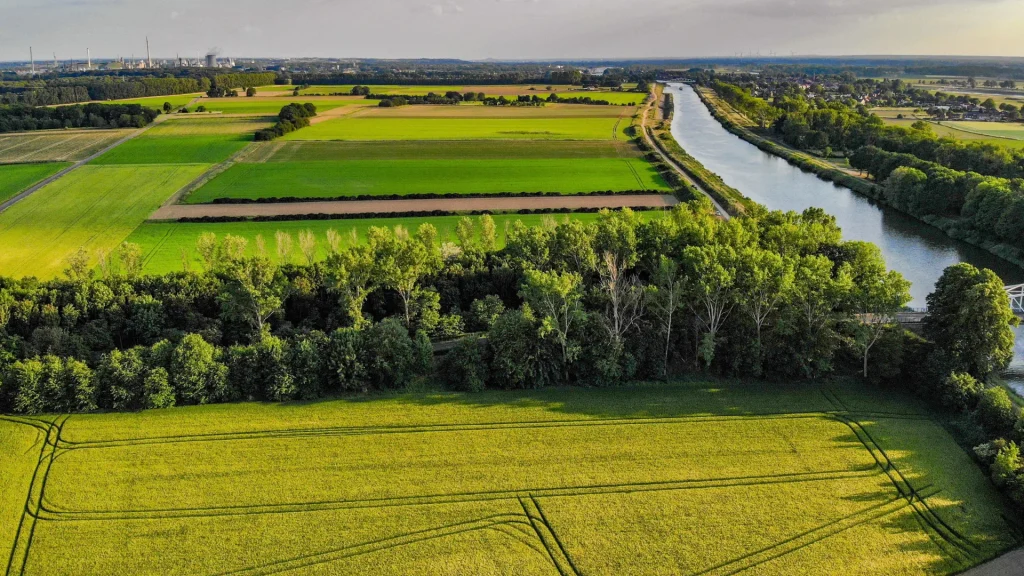
Land tax is an annual NSW state tax assessed on taxable land owned on the yearly taxing date. It can apply to vacant land, investment property, holiday homes, and company title units. Owners pay it when their taxable landholdings exceed applicable thresholds or lack an exemption.
Revenue NSW bases liability mainly on unimproved land values, excluding buildings and other improvements. The tax forms part of NSW revenue, which is used to support essential government and community services.
Who Pays Land Tax in NSW?
- Individual owners pay when their taxable NSW land value exceeds the general threshold.
- Joint owners share one threshold for jointly owned land, subject to individual assessment rules.
- Certain companies and trusts may face different threshold rules or receive no threshold.
- Owners of qualifying exemptions, including a principal place of residence, generally do not pay standard land tax.
- From 1 February 2024, PPR claimants generally need occupants to hold at least 25% ownership interest.
- Foreign owners of residential land may also owe separate surcharge land tax.
Land Tax NSW: 2026 Rates & Thresholds
| Threshold | Land value | 2026 rate |
|---|---|---|
| General | More than $1,075,000 but less than $6,571,000 | $100 + 1.6% of the amount above $1,075,000 |
| Premium | More than $6,571,000 | $88,036 + 2% of the amount above $6,571,000 |
For the 2026 land tax year, NSW keeps the general and premium thresholds unchanged. The general threshold is $1,075,000, while the premium threshold starts above $6,571,000. The standard rate adds $100 plus 1.6% of the value exceeding $1,075,000. Premium land tax liability is calculated as $88,036 plus 2% of the value exceeding $6,571,000.
Accordingly, owners below the general threshold generally owe no standard land tax. The NSW land tax framework includes the Land Tax Management Act 1956 and Regulation 2024. These rules operate alongside other NSW legislation governing land tax assessment and administration.
Land Tax NSW Interest Rates and Payment Due Dates:
Revenue NSW allows 60 days after issuing an assessment notice for payment or payment-plan arrangements. Taxpayers who pay the full amount before its due date receive a 0.5% discount. However, overdue land tax attracts daily interest, calculated from the original payment due date.
For 1 October through 31 December 2026, the applicable interest rate totals 12.51% annually. This rate combines a 4.51% market component with an 8% premium component. Accordingly, owners should pay promptly or establish an eligible interest-free plan before their due date.
How is Land Tax in NSW Calculated?
General Calculation:
(Total taxable land value − $1,075,000) × 1.6% + $100
Premium Calculation:
$88,036 + (Total taxable land value − $6,571,000) × 2%
Revenue NSW first averages applicable land values across three years, then compares the result against thresholds. For example, $1.05 million, $1.10 million, and $1.15 million produce a $1.10 million average. The taxable amount equals $1.10 million minus $1.075 million, leaving $25,000 above the threshold.
Applying 1.6% to $25,000, then adding $100, produces $500 of land tax. A $900,000 average remains below the threshold, so standard land tax equals $0. At $7 million, premium tax equals $88,036 plus 2% of $429,000, totalling $96,616. Revenue NSW assesses taxable ownership at midnight on 31 December and charges the following tax year.
2026 Reforms in NSW Land Tax
From the 2026 land tax year, transitional protection for the principal place of residence exemption ends. Owners living in the property must collectively hold at least 25% ownership to retain exemption eligibility. Previously protected owners with smaller interests could continue claiming the exemption through the 2024 and 2025 tax years.
Accordingly, those owners can become liable from the 2026 land tax year if requirements remain unmet. Additionally, the general threshold remains $1,075,000, while the premium threshold remains $6,571,000 for 2026. Eligible build-to-rent developments can also receive an ongoing 50% reduction in taxable land value.
Exemptions & Concessions Available in NSW Land Tax
NSW land tax exemptions commonly cover a principal place of residence and eligible primary production land. Other qualifying properties include boarding houses, aged-care facilities, childcare centres, caravan parks, clubs, and nonprofit organisations. Eligible build-to-rent properties can receive a 50% reduction in taxable land value under current rules.
Some low-cost accommodation and special-use properties may receive full exemptions or proportionate taxable-value reductions. Owners must generally claim available exemptions through Land Tax Online and provide supporting evidence to Revenue NSW. Furthermore, concessions may apply when owners build, renovate, change residences, or temporarily live elsewhere.
Criteria for Special Circumstances
Land tax NSW rules can differ depending on ownership structures, property values, and individual circumstances. Accordingly, Revenue NSW applies specific assessment rules when owners share properties or hold multiple taxable interests.
These provisions also affect high-value portfolios, trusts, and owners with smaller ownership interests. Therefore, reviewing the applicable circumstances helps owners identify requirements, exemptions, and potential land tax liabilities.
Joint Owners:
Joint owners can face separate assessments when they hold property together and own other taxable land individually. Revenue NSW uses secondary deductions to reduce double taxation arising from jointly owned and individually owned property.
If one owner uses the property as their principal place of residence, the property may receive exemption coverage. However, the resident owners must collectively hold at least 25% ownership from the 2026 tax year.
Single Owners:
A single owner combines taxable NSW land holdings when Revenue NSW determines annual land tax liability.
Accordingly, several properties can push the combined value above the general threshold despite separate ownership titles.
An eligible principal place of residence exemption can remove the home from the taxable calculation. However, investment property, vacant land, and other taxable holdings can remain included in assessment totals.
High-Value Portfolio Owners:
High-value portfolio owners may enter premium land tax once combined taxable land value exceeds $6,571,000.
Revenue NSW calculates the premium liability using the applicable rate on land above that threshold. Therefore, owners should combine taxable holdings rather than assess each property separately. Exempt land normally stays outside the taxable value when owners satisfy applicable statutory requirements.
Trust-Owned Property:
Trust ownership can produce different land tax treatment depending on the trust structure and beneficiary arrangements. The tax-free threshold generally does not apply to special or discretionary trusts under NSW rules.
Some fixed trusts may receive different treatment when trustees and beneficiaries satisfy statutory conditions.
Trustees should review each ownership interest before claiming an exemption, threshold, or other land tax concession.
Owners With a Small Property Interest:
Owners who purchased or acquired property on or after 1 February 2024 without 25% ownership can become liable. The requirement applies when the person claiming residence owns the property individually or jointly with another resident. Consequently, a resident holding only a small interest may lose the principal place exemption. Existing eligible owners received transitional treatment, but that protection ends from the 2026 land tax year.
Understanding Your Notice of Assessment
Revenue NSW sends land tax assessment notices to landowners who may owe land tax or surcharge land tax. The notice states your assessment amount, payment due date, affected properties, and the assessment year. It also explains taxable land values, applicable exemptions, average values, and how Revenue NSW calculated liability.
Accordingly, check every ownership detail and exemption before making payment or arranging instalments. You generally have 60 days after receiving the notice to pay or establish an interest-free payment plan. Paying the full amount by the due date can also provide a 0.5% discount.
Conclusion
Land Tax NSW applies specific rules to taxable land, ownership structures, exemptions, thresholds, calculations, and payment responsibilities. Owners should review their assessment notice carefully and confirm property details before making payments or claiming available exemptions. Australian citizens and foreign owners may face different requirements, particularly where surcharge land tax applies to residential property.
Additionally, special circumstances can affect liability when owners share property, hold trusts, change residences, or manage multiple properties. Therefore, checking current Revenue NSW guidance helps owners meet requirements and avoid unexpected land tax charges, interest, or penalties.
FAQs
1. Do Australian citizens have to pay land tax in NSW?
Australian citizenship does not automatically exempt an owner from ordinary land tax NSW liabilities. However, Australian citizens generally do not qualify as foreign persons for surcharge land tax purposes.
2. Do foreign residents pay land tax in NSW?
Foreign persons who own residential land in NSW generally pay surcharge land tax alongside ordinary land tax. From the 2025 land tax year onward, the surcharge rate is 5% without a tax-free threshold.
3. Can I pay my NSW land tax in instalments?
Eligible taxpayers can arrange interest-free plans over three, six, or nine months before tax becomes overdue. Revenue NSW allows fortnightly or monthly instalments using BPAY, cards, or direct debit.
4. How can I pay land tax NSW?
Revenue NSW accepts Mastercard or Visa online and by phone, while BPAY provides another electronic option. You can also pay at participating Service NSW Centres or Australia Post using available payment methods.