
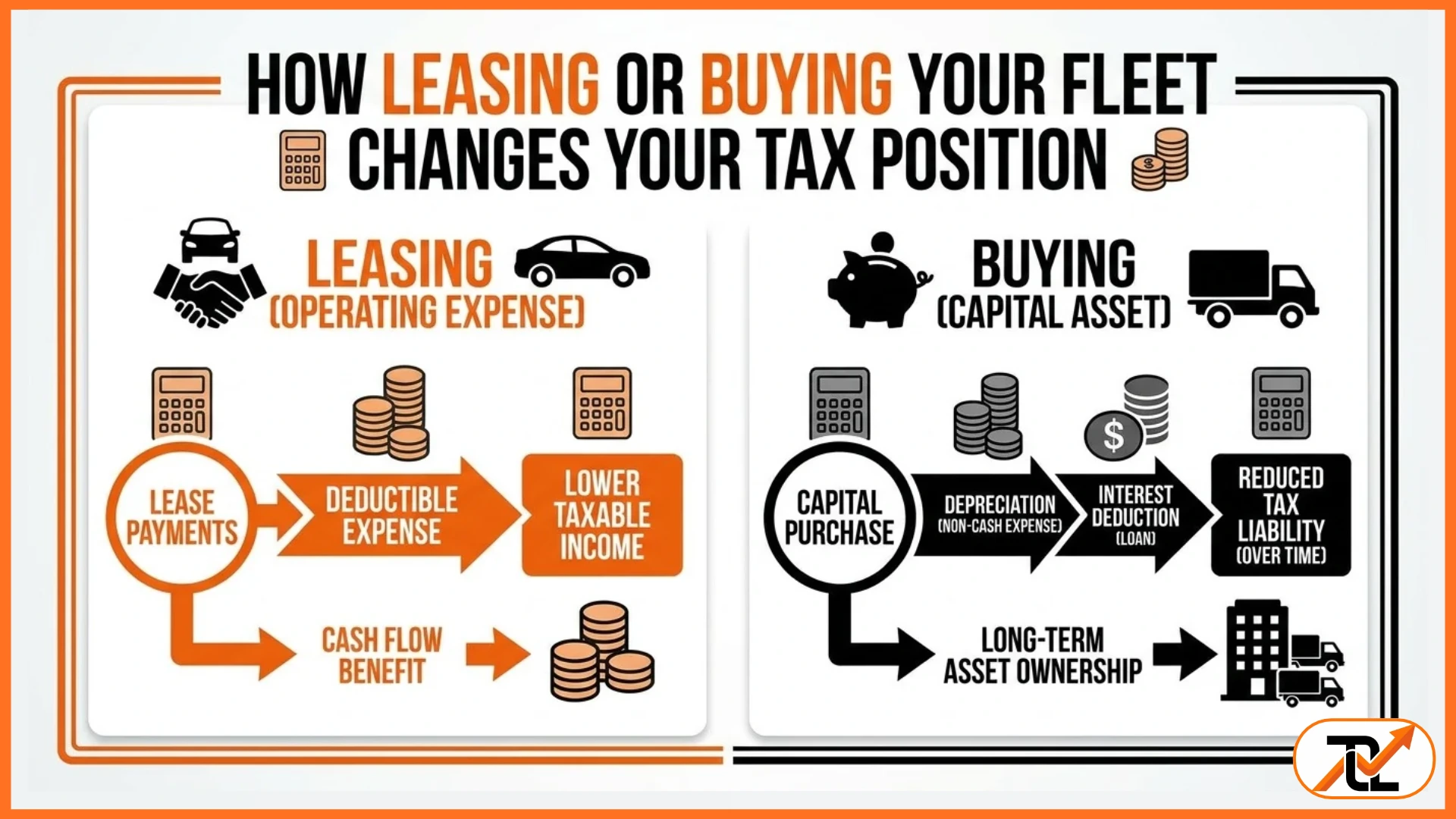
For businesses that run vehicles, leasing or buying your fleet usually gets framed as a cash flow question. It’s also a tax question, and the two options land very differently on your return and your BAS. Owning a ute means depreciation, car limits, and a large GST claim in one quarter. Leasing means a regular expense and smaller, steadier GST credits. Neither is automatically better. Here’s how each one works at tax time, so you can have a sharper conversation with your accountant.
So how does leasing or buying change your tax position? The short answer is that leasing gives you regular deductions and small GST credits as you pay, while buying gives you depreciation over several years and one larger GST credit upfront. Fringe benefits tax (FBT) and the car limit apply either way.
Leasing Gives You a Deduction Each Time You Pay
Many fleet leasing services use an operating lease, where the business never owns the vehicle. Lease payments are generally deductible in the year you make them, to the extent the vehicle is used to earn income. A ute used 100 per cent for work is typically fully claimable. If there’s private use, only the business portion is.
The appeal is simplicity. There’s no asset to depreciate, no effective life to track, and no balancing adjustment when the vehicle goes back at the end of the term. Your deduction roughly matches what you pay each month, which makes budgeting easier.
Buying Spreads Your Deduction Over Several Years
When you buy, the purchase price isn’t deducted upfront. You claim the decline in value over the vehicle’s effective life, either under the standard depreciation rules or, for eligible small businesses, through the simplified depreciation pool.
The $20,000 instant asset write-off, now permanent for small businesses with aggregated turnover under $10 million, gets plenty of attention. For fleets, it rarely applies. Most work vehicles cost well over $20,000, so they go into the pool and are deducted at 15 per cent in the first year and 30 per cent after that. When you sell, the sale price is compared with the written down value, and the difference can become assessable income or a further deduction.
Buying Brings One Large GST Credit, Leasing Spreads It Out
For a GST registered business, buying a vehicle outright usually means claiming the GST credit in the BAS period you buy it, as long as you hold a valid tax invoice. That’s a large one-off credit, although for passenger cars the credit is capped at the amount that relates to the car limit.
With a lease, GST is included in each payment, so you claim a smaller credit on every BAS. The total can be similar over the term, but the timing is spread out. Businesses that like predictable BAS results often prefer that pattern. Those looking for a cash boost in a particular quarter may lean towards buying.
The Car Limit Applies to Passenger Cars Whether You Lease or Buy
The ATO sets a car limit each financial year, which caps the cost used to work out depreciation on a passenger car. Spend more than the limit and the extra isn’t depreciable. Leasing a car above the limit doesn’t get around it either. Under the luxury car lease rules, the ATO treats the arrangement as if you’d bought the car with a loan and works out deductions on that basis.
For many fleets this matters less than you might expect. The car limit doesn’t apply to vehicles designed to carry a load of one tonne or more, or nine or more passengers. Plenty of utes, trucks and buses fall outside it, but check the specs of each vehicle rather than assuming.
FBT Stays the Same Whether You Lease or Buy
A common assumption is that leasing changes FBT. It doesn’t. If an employee can use a work vehicle privately, FBT may apply regardless of who owns it. What matters is the type of vehicle and how it’s used.
Utes, vans and other commercial vehicles can qualify for an exemption where private use is limited to travel between home and work and minor, infrequent trips. Logbooks and a clear vehicle use policy make the difference here, whatever the ownership structure.
Leasing Keeps Capital Free, Buying Ties It Up
Over the full life of a vehicle, the total deductions from leasing and buying can end up closer than people expect. The bigger difference is often what happens to your cash. Buying ties up capital, or adds debt, from day one. Leasing spreads the cost and leaves that capital for wages, tenders or other equipment.
A lease can also bundle in maintenance, registration and replacement vehicles, turning several unpredictable costs into one regular payment. For businesses running vehicles on remote sites, where downtime is expensive, that predictability can be worth more than the deduction itself.
Buy If You Have Capital to Spare, Lease If You Need Flexibility
Buying tends to suit businesses with spare capital, vehicles they plan to keep for most of their working life, and enough profit to use the depreciation deductions. Leasing tends to suit businesses that want steady costs, need to keep capital free, or expect their fleet to change as contracts come and go.
Plenty of businesses use both. Before you settle on leasing or buying your fleet, run the numbers with your accountant using your actual vehicles, business use percentage, and turnover. The right answer depends on those details far more than on any general rule.