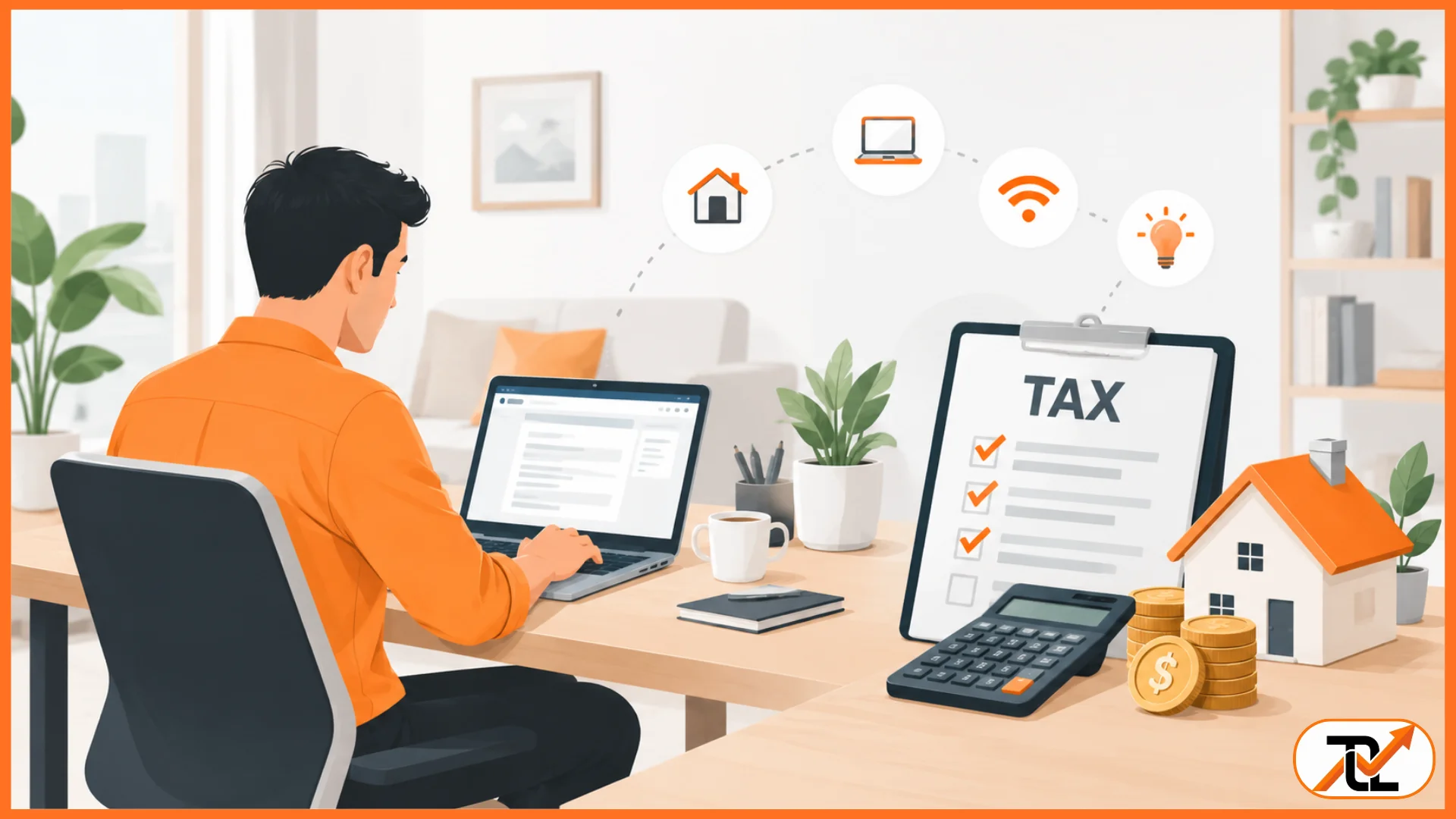
A work from home tax deduction can reduce your taxable income, yet many employees remain unsure which costs qualify. Working remotely can create extra household expenses that require careful separation between private and employment use. The Australian Taxation Office requires evidence showing additional expenses directly resulted from working at home.
Your taxable income also determines the tax rates that apply, so Australian tax brackets provide useful context. Fortunately, employees can choose between recognised methods for calculating eligible working from home expenses. You can claim the fixed rate or calculate actual additional expenses using supporting records. This guide explains eligibility, claimable costs, calculation methods, records, and common questions about working from home.
What Is a Work From Home Tax Deduction?

A work from home tax deduction allows eligible employees to claim additional expenses incurred while performing employment duties remotely. You can generally claim only expenses that relate directly to your work purposes and employment income.
- The deduction can cover electricity, internet, phone expenses, stationery, and eligible office furniture.
- You must keep records, including receipts, work-hour records, and relevant calculations.
- Additionally, you can choose the fixed rate method or actual cost method.
- However, your employer must not have reimbursed the expenses you intend to claim.
The ATO requires you to claim only the work-related portion of shared expenses.
Who Can Claim Working From Home Expenses?
Employees can claim working from home expenses when remote work fulfils genuine employment duties rather than occasional minor tasks. You must incur additional running expenses and keep records supporting the expenses you claim.
- Eligible: Employees performing substantive duties from home and paying additional eligible expenses themselves.
- Ineligible: Employees only checking emails or taking occasional calls from home.
- You generally cannot claim expenses your employer reimburses or directly provides.
- Sole traders and business owners follow separate rules when their home serves as their principal workplace.
Therefore, eligibility depends on your employment duties, expenses incurred, and supporting records.
Work From Home Tax Deduction 2026: Key ATO Rules at a Glance
For the 2025–26 income year, the ATO fixed rate remains 70 cents for each hour worked from home.
| Income year | Fixed rate |
|---|---|
| 2025–26 | 70 cents per hour |
| 2024–25 | 70 cents per hour |
| 2023–24 | 67 cents per hour |
Using the fixed rate covers electricity, gas, internet, phone usage, stationery, and computer consumables. You can separately claim eligible assets, including office furniture, based on applicable depreciation rules.
Alternatively, the actual cost method lets you calculate your additional expenses individually. A dedicated home office is not required when you use the fixed rate method.
Work From Home Tax Deduction 2025: What Changed This Year
For the 2024–25 income year, the ATO fixed rate increased from 67 cents to 70 cents per hour. That increase applied from 1 July 2024, raising the potential deduction for employees using the fixed rate. For 2025–26, however, the ATO retained the same 70-cent rate, so no further rate increase occurred.
Accordingly, employees should not expect a different hourly rate when calculating their current tax return. Nevertheless, accurate records remain necessary, regardless of whether you use the fixed or actual cost method. Your tax return should include only legitimate expenses supported by appropriate records and calculations.
The Two ATO Methods to Claim a WFH Tax Deduction
The Australian Taxation Office provides two methods for employees claiming eligible working from home expenses. Accordingly, you can calculate your working from home expenses using the fixed rate or actual cost method. Both methods require records supporting the expenses you incur while working at home.
However, each method calculates eligible costs differently, so your circumstances can influence your choice. The sections below explain how each calculation works and what expenses each method covers.
Fixed Rate Method:
The fixed rate method lets employees claim 70 cents for every hour you work from home. The rate covers several additional running expenses without requiring separate calculations for each cost.
- It covers electricity, gas, internet, phone usage, stationery, and computer consumables.
- You must record every hour worked from home throughout the entire income year.
- You need evidence showing expenses covered by the hourly rate.
- You can separately claim eligible depreciating assets, including office furniture and equipment.
The ATO states that you cannot separately claim expenses already included within this hourly rate.
Actual Cost Method:
The actual cost method calculates the work-related portion of expenses you actually incur.
You must calculate each eligible expense using a reasonable and supportable basis.
- You can claim the work-related portion of electricity, internet, phone, and other eligible expenses.
- You need records showing the expenses and how you calculated your deduction.
- Depreciating assets can qualify for deductions based on their work-related use.
- You should retain bills, receipts, usage records, and calculations supporting your claim.
Although this method requires more records, it may produce a larger deduction for higher work-related expenses.
Fixed Rate vs Actual Cost: Which Should You Choose?
| Factor | Fixed Rate Method | Actual Cost Method |
| Calculation | 70¢ × eligible hours worked from home | Actual work-related expenses |
| Record keeping | Hours plus evidence of covered expenses | Detailed expenses and calculation records |
| Phone and Internet | Included within hourly rate | Work-related portion calculated separately |
| Depreciating Assets | Can claim a separate deduction | Can claim based on eligible work use |
| Administration | Generally simpler | Generally more detailed |
Generally, the fixed rate suits employees wanting simpler calculations and predictable record keeping. Conversely, use the actual cost method if you have substantial work-related expenses and detailed records. Therefore, use the method that produces the more appropriate result of working from home expenses.
What Home Office Expenses Can You Claim?
You can claim a deduction when working from home creates additional work-related costs. For the 2025–26 tax return, several home office expenses may qualify as work-related deductions.
- Electricity and gas used for work-related activities can qualify as additional running expenses.
- Home internet and mobile phone costs can qualify for their work-related portion.
- Stationery, computer consumables, and eligible home office furniture may also attract deductions.
- Cleaning costs for a dedicated work area can qualify under certain circumstances.
However, private spending remains ineligible, so you must exclude personal use when calculating deductions.
Occupancy Expenses (Rent, Mortgage Interest, Rates):
Employees generally cannot claim occupancy expenses because these costs usually remain private and domestic. Occupancy expenses can include rent, mortgage interest, council rates, land taxes, and insurance.
- Employees may claim these costs only in limited circumstances under ATO requirements.
- A dedicated work area alone does not automatically make occupancy expenses deductible.
- Your employment arrangements and home-office circumstances can affect eligibility for these deductions.
Therefore, check the Australian Taxation Office guidance before including occupancy costs in your tax return.
What You Can’t Claim:
You cannot claim ordinary private expenses simply because you perform employment duties from home.
- Private portions of electricity, internet, phone, cleaning, or furniture costs remain non-deductible.
- You cannot claim expenses your employer reimbursed or paid directly on your behalf.
- Using the fixed rate means covered expenses cannot receive another separate deduction.
- Personal coffee, meals, general household items, and ordinary mortgage repayments remain private expenses.
You also cannot claim the full cost when an expense serves both work and private purposes.
How to Calculate Your WFH Tax Deduction?
To calculate your deductions for work from home, multiply eligible hours by the ATO fixed rate.
For 2025–26, the fixed rate equals 70 cents per hour worked from home.
Example:
Working 1,200 eligible hours produces a deduction of $840 using this method.
You must retain records proving your actual hours and expenses covered by the rate. Alternatively, use actual costs by calculating additional expenses incurred from working at home. Your work from home deductions calculator can help estimate amounts before you lodge your tax return.
Claiming Your WFH Tax Deduction on Your Tax Return
You can claim a work from home tax deduction when eligible expenses relate directly to your employment duties. For the 2025–26 tax return, select either the fixed rate or actual cost method. Keep records showing your hours worked from home and evidence supporting eligible expenses. The fixed rate provides a 70 cents rate per hour for eligible additional running expenses.
Alternatively, actual costs require calculations showing your work-related share of eligible spending. Enter your claim in the appropriate deductions section when you lodge your tax return. A registered tax agent can assist when your circumstances require additional calculations or supporting records. The ATO explains the required records and claiming process in its official guidance.
WFH Tax Deduction for Sole Traders & Small Business Owners
Sole traders and small business owners can claim eligible deductions for expenses incurred through business activities conducted at home. The applicable rules differ from employee claims because business owners assess home-based business expenses separately.
You may use the fixed rate for eligible running costs, provided you meet requirements. Additionally, you can claim eligible assets separately, including computers and other depreciating equipment. A dedicated business area may also allow certain occupancy expenses under specific circumstances.
For mixed-use costs, calculate and claim only the business-related portion of your spending. Keep records supporting calculations, receipts, hours, and the business use of your home. The ATO recommends checking its home-based business guidance before preparing your business deductions.
Key Takeaways
A work from home tax deduction can reduce taxable income when eligible expenses support your employment duties. The ATO currently allows employees to choose between fixed-rate and actual-cost calculation methods.
The fixed rate provides 70 cents for each eligible hour worked from home. Meanwhile, actual costs require careful calculations based on your genuine work-related portion. You can also claim eligible depreciating assets separately when the fixed rate applies.
However, private expenses require exclusion, while records should support every amount included. Keep receipts, bills, and hour records organised throughout the income year.
At tax time, accurate documentation makes it easier to work out your claim correctly. The right method depends on your expenses, working pattern, and available records. Which method will you use for your next work-from-home tax deduction?
FAQs
1. Can I claim coffee, tea, or other household expenses?
No, ordinary household items such as coffee, tea, and milk generally remain private expenses. You also cannot claim costs your employer reimbursed or directly provided.
2. Can I claim expenses used for both work and private purposes?
Yes, but you can claim only the work-related portion of those shared expenses. Keep records showing how you calculated the deductible percentage or amount.
3. Do I need a dedicated home office to claim working-from-home expenses?
No, the fixed rate method does not require a dedicated home office. However, certain occupancy and cleaning deductions may require a dedicated workspace.
4. Can I claim my home office furniture?
Yes, eligible furniture may qualify separately when you use the fixed rate method.
Items costing more than $300 generally require a decline in value calculation.
5. Can I claim internet and phone expenses when working from home?
Yes, you can claim the work-related portion when using actual costs for qualifying expenses. The fixed rate already covers home and mobile internet and phone usage.